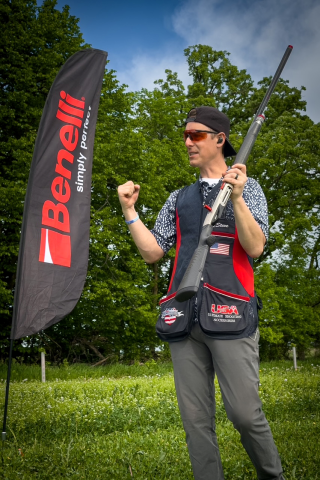
Water, Wings, and Willpower
Exit signs along Route 2 flashed by my car like Ektachrome slides from my dad’s old Kodak projector. Sandusky. Put-In-Bay. Port Clinton and Cedar Point. And like those now-faded images, these signs along the northern Ohio/Lake Erie border were snapshots from my past. I grew up in Ohio in the 70s and the area I was traveling through now filled me the same sense of adventure and excitement I’d felt as a kid. The wild areas where Ohio bumps up against one of the Great Lakes was a far cry from the corn and soybean fields that covered much of the rural area where I was raised. Camping vacations and an annual pilgrimage to Cedar Point amusement park where roller coasters swooped out over the Lake Erie shoreline were a thrilling part of our family summers. Now, decades removed from that Ohio boyhood, I was about to get a brand-new perspective on my home state and a glimpse into a world I had no idea existed.
I was driving west on that October afternoon at the invitation of Jim Alexander of Ducks Unlimited. A couple weeks earlier, during a dinner in Baltimore to discuss Benelli’s participation in DU’s upcoming national convention, the topic turned to where everyone was from. When I mentioned Ohio the DU crowd perked up. I’m used to a more subdued reaction when I tell people I’m from the Buckeye State, but Jim began to speak enthusiastically about an annual hunt that DU organizes on the Lake Erie marshes. Would I like to attend? The hunt was only a couple of weeks away, but could I be there? The answer was yes…I had a rare opening in my schedule, and I loved the idea of hunting ducks in my home state.
Two weeks later, I would find myself hunting two different duck clubs during my time in Ohio. Both were filled with tradition and history, and we were warmly welcomed by current members. I even had the chance to spend a night and hunt at Winous Point, recognized as the oldest duck club in the U.S. Founded in 1856, Winous Point continues its hunting heritage today but also supports a surprising amount of wetlands and waterfowl research on its grounds.
As wonderful as those experiences were, I would discover that this trip was far more than a hunt. It is an annual opportunity for DU to showcase their impressive and collaborative efforts on behalf of wetlands and waterfowl. Over the course of 3 days, fellow attendees and I visited several DU cornerstone projects in northern Ohio. More importantly, a multitude of groups with different missions would share their common goal with us: the preservation of key wetlands habitat in northern Ohio. At a time in our country when it seems two people can’t decide how to cross the street without a fistfight, I witnessed the results of local, city, county, state, federal and even interstate organizations working together for the greater good of preserving—and in some cases even creating—wetland habitat.
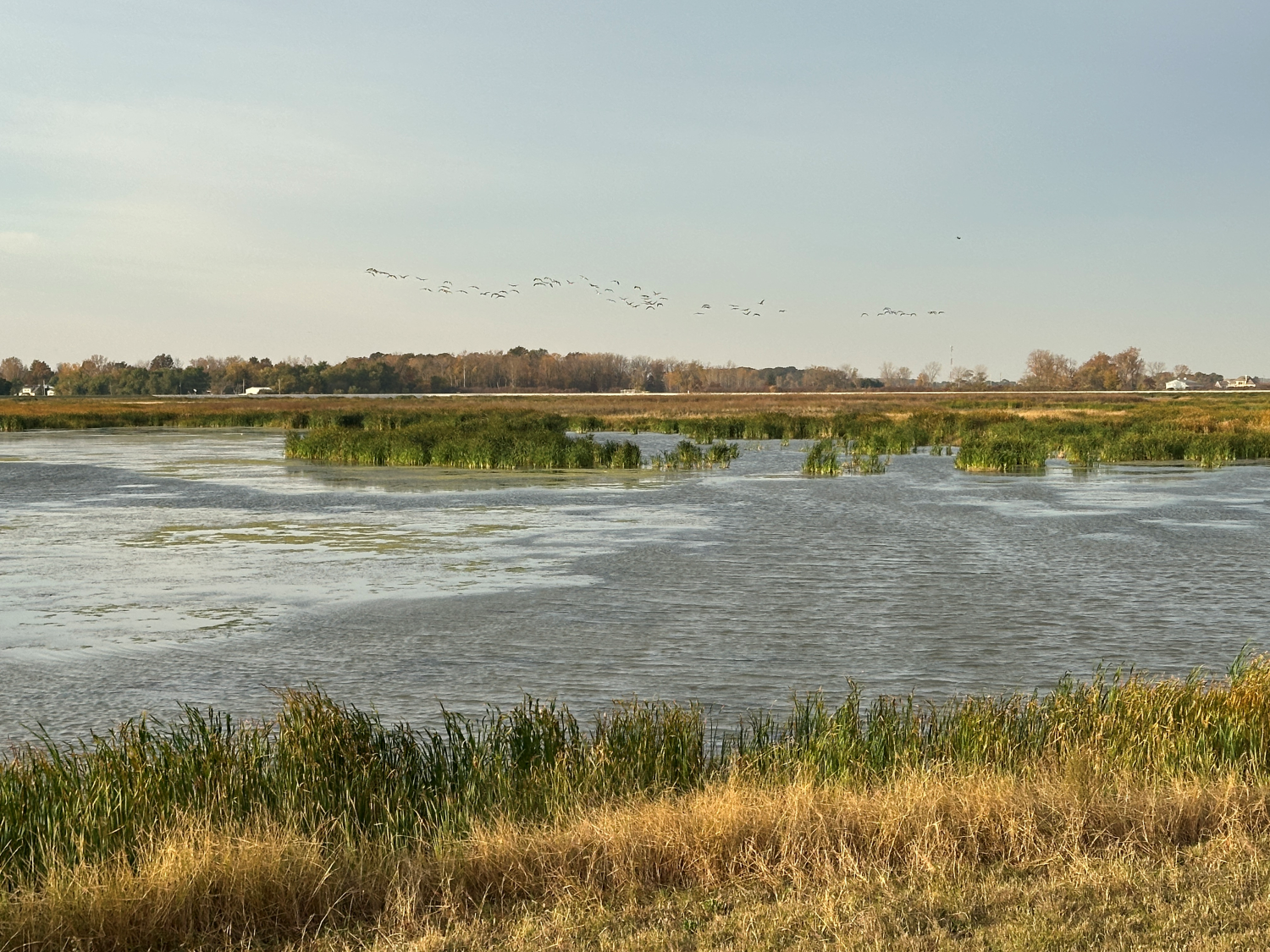
Our first visit was to Howard Marsh. This project sits close to Lake Erie in the northwest corner of the state. It’s a jewel in the crown of DU efforts in the area and close enough to Toledo (less than 30 minutes) to be part of their Metroparks system. We pulled into a gravel parking lot that overlooked a beautiful marsh with undulating edges and the kind of grass hummocks, cattail and open water mix that makes a waterfowler twitch. Songbirds bounced through the shrubs along the edge. A few ducks flew into sight and splashed down as a muskrat paddled from the bank to a cattail patch. Incredibly, just a few short years ago, our view would have been a tabletop-flat expanse of field covered in corn or soybeans.
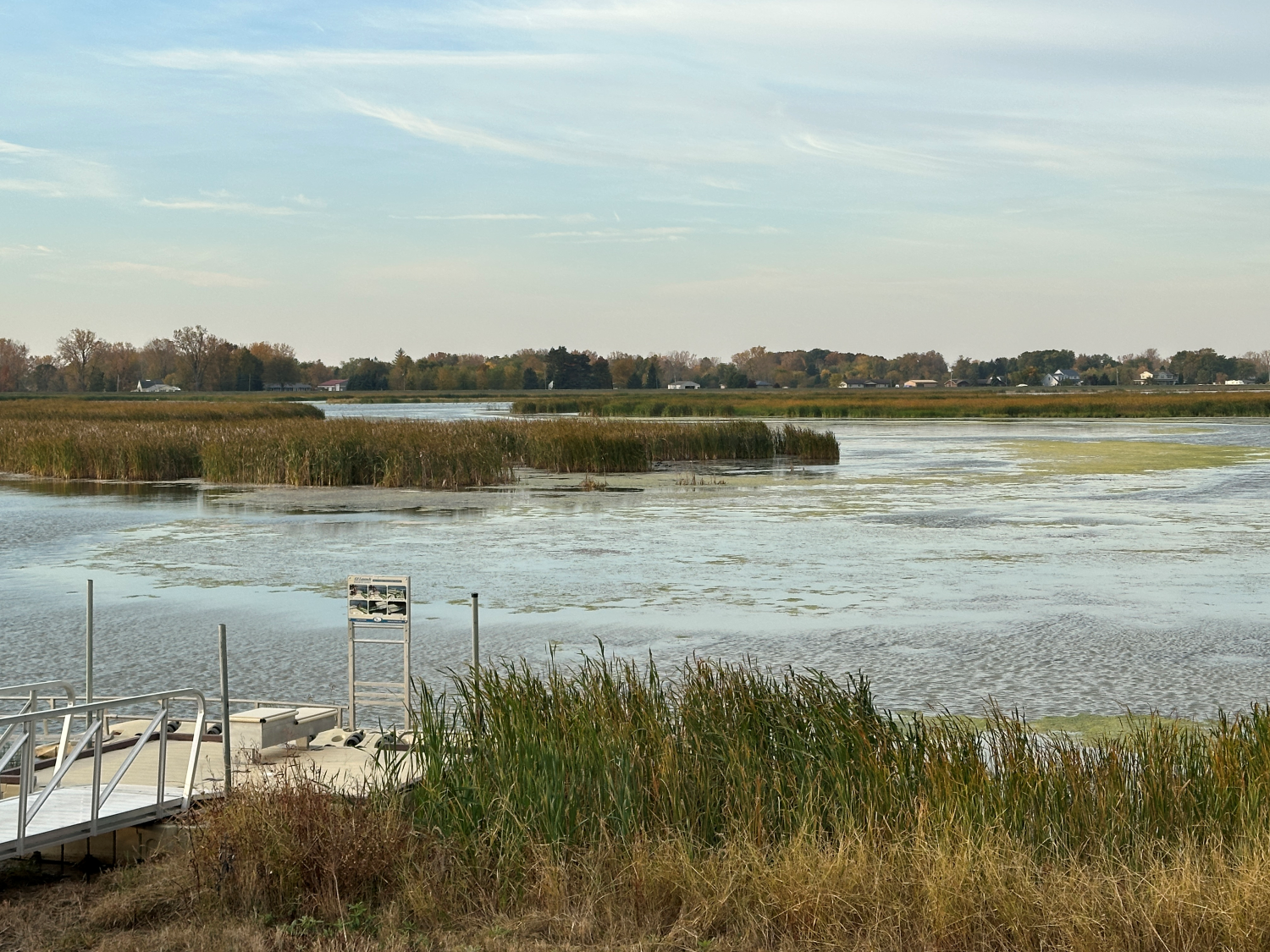
More than a century of agricultural draining and filling of the land resulted in tillable fields and houses where the expansive wetlands and forests of The Great Black Swamp once prevailed. Prior to the 1800s, The Great Black Swamp was a daunting 100-mile by 25-mile muddy footprint that cut across several states. Considered foreboding, dark and hard to traverse by early settlers, its historic northeastern boundary was near where we were standing. Through a coordinated effort led by Ducks Unlimited with at least a dozen agencies and organizations, Howard Marsh opened to the public in 2018: 1,000-acres of wetlands and recreational area reborn from farm fields.
A raised two-track dirt road leads straight away from the Howard Marsh parking lot. On one side is the marsh. The opposite side is a large field of soybeans. Future plans call for the reclamation of that soybean field to expand the marsh even further, nearly doubling the 350-acre marsh in front of us. The contrast between the views, separated by just a dirt road, was striking. To imagine that a massive field had been turned into a natural marsh was mind-bending; the result is impressive.

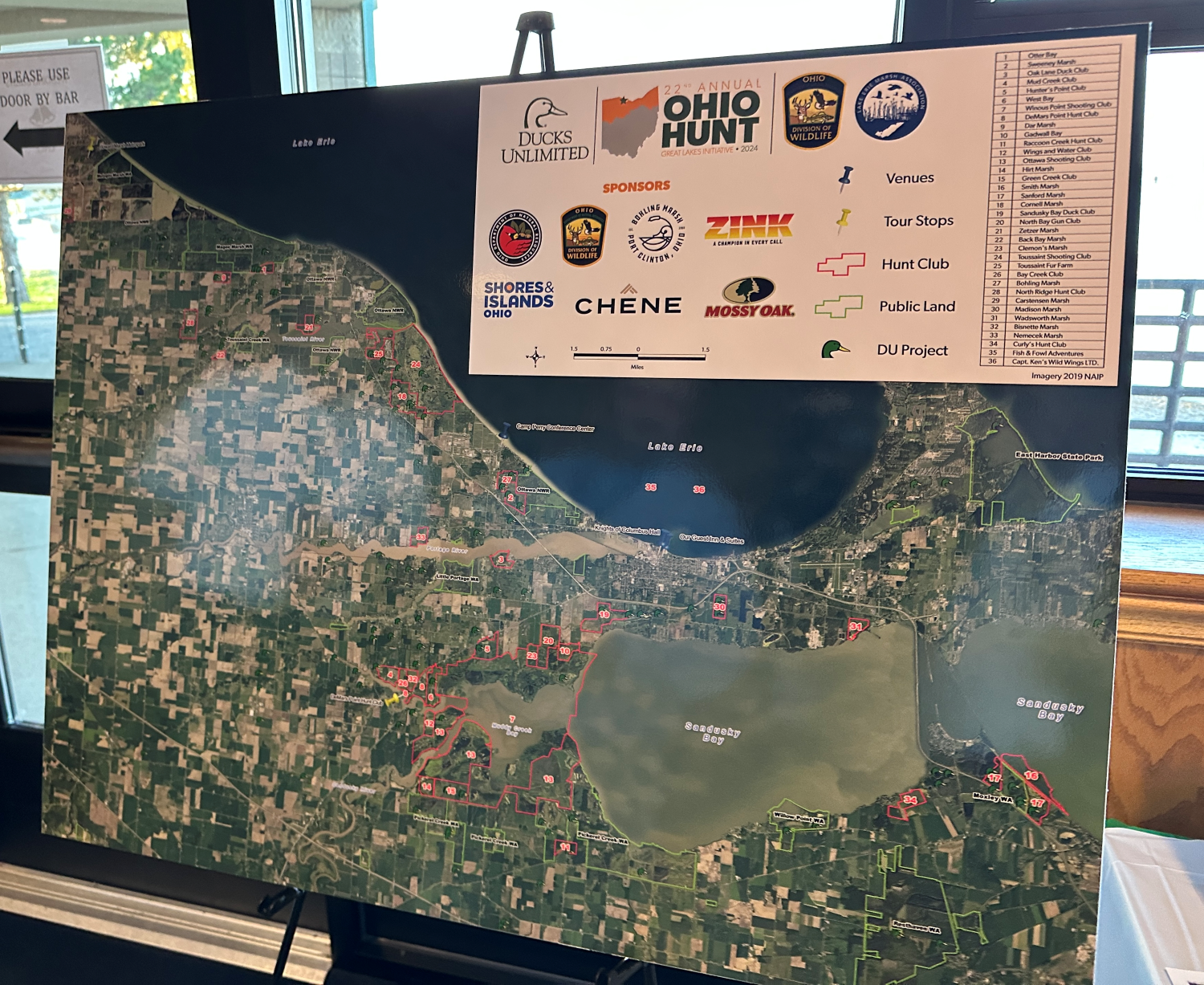
Howard Marsh is just one of many wetland projects stretching for miles along Lake Erie. All of this sounds great for wildlife and waterfowl. More cover. More feeding and resting areas. But there is another reason these projects are critical to northern Ohio. Over the last couple of centuries, the development of so much land into agricultural fields, housing and retail space has eliminated much of the natural filtration system provided by the previous wetlands. The result has been diminished water quality and dangerous algal blooms from straight runoff into Lake Erie. Those original natural marshes allowed nutrients to settle and disperse instead of being flushed into the main body of the lake. Today, a wide array of organizations dedicated to improving this environment have mobilized around water quality improvement.
Next, we traveled to the main part of the Howard Marsh Metropark. Kendra Wecker, Chief of the Division of Wildlife of the Ohio DNR provided an overview of the park and the involvement of the Ohio Department of Natural Resources. The night before, I watched Kendra participate as a $130,000 donation was made to help protect Canadian waterfowl breeding grounds that would ultimately benefit migrations through Ohio. Yes, you read that correctly. I was witnessing a state agency working with conservation organizations across international boundaries to help secure a future for wildlife that doesn’t recognize international borders.
She would also tell us that the mission for Howard Marsh was to allow public hunting, fishing and trapping on these newly reclaimed lands. Amazing and uplifting, the news just kept getting better.
I heard multiple times how this and other nearby projects were born out of partnerships with the local duck clubs, H2Ohio, the U.S. Fish and Wildlife Service, city metroparks systems, the Department of Agriculture, members of Congress, private landowners, volunteers and many more with DU at the helm. I was inspired by what I had seen and heard. Many of these projects were so large in scale and would require the involvement of so many organizations and agencies that it was hard to imagine that any of them could have been accomplished. Hats off to all involved and especially to Ducks Unlimited for having the vision and the tenacity to lead these efforts.
Perhaps the biggest surprise of my trip was our next speaker in the marsh. For me, it summed up my few days revisiting Ohio, seeing the amazing results envisioned by so many people with so many perspectives.
The woman who spoke was from the Biggest Week in American Birding, a 10-day spring event held in northwest Ohio featuring seminars, workshops, international keynote speakers and, of course, guided birding trips to the nearby woods and marshes. Founded in 2010, the BWIAB draws birders from all over the world for what has become a significant warbler and songbird migration through northwest Ohio. The chain of habitat restoration in the area has dramatically increased migration numbers, turning that part of Ohio into a world-class birding destination. On the surface, you might not think that a birding organization and a hunting organization would see eye to eye, but she spoke passionately about the partnership.
“We wouldn’t have this level of interest in this area if it weren’t for DU’s efforts to restore habitat here” she said. “I am often asked by birders during our event what they can do to support more of this type of birding opportunity. I tell them to buy a Federal Duck Stamp. And I tell them to thank a duck hunter.”
You could have knocked me over with a feather.
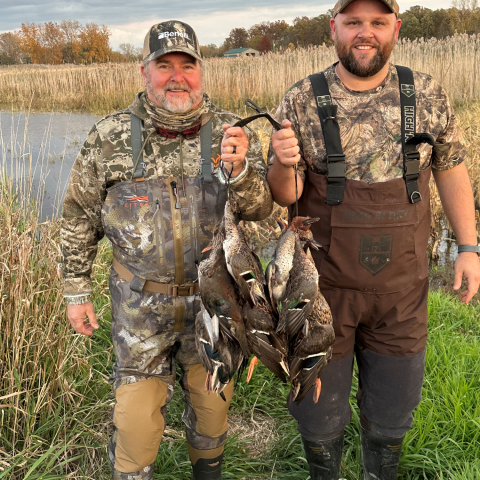
The author (left) and Jake McPhearson of Ducks Unlimited with the results of an afternoon hunt at Sweeney Marsh Hunting Club.
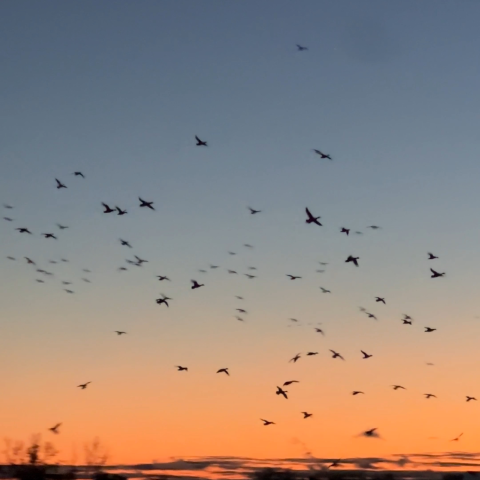
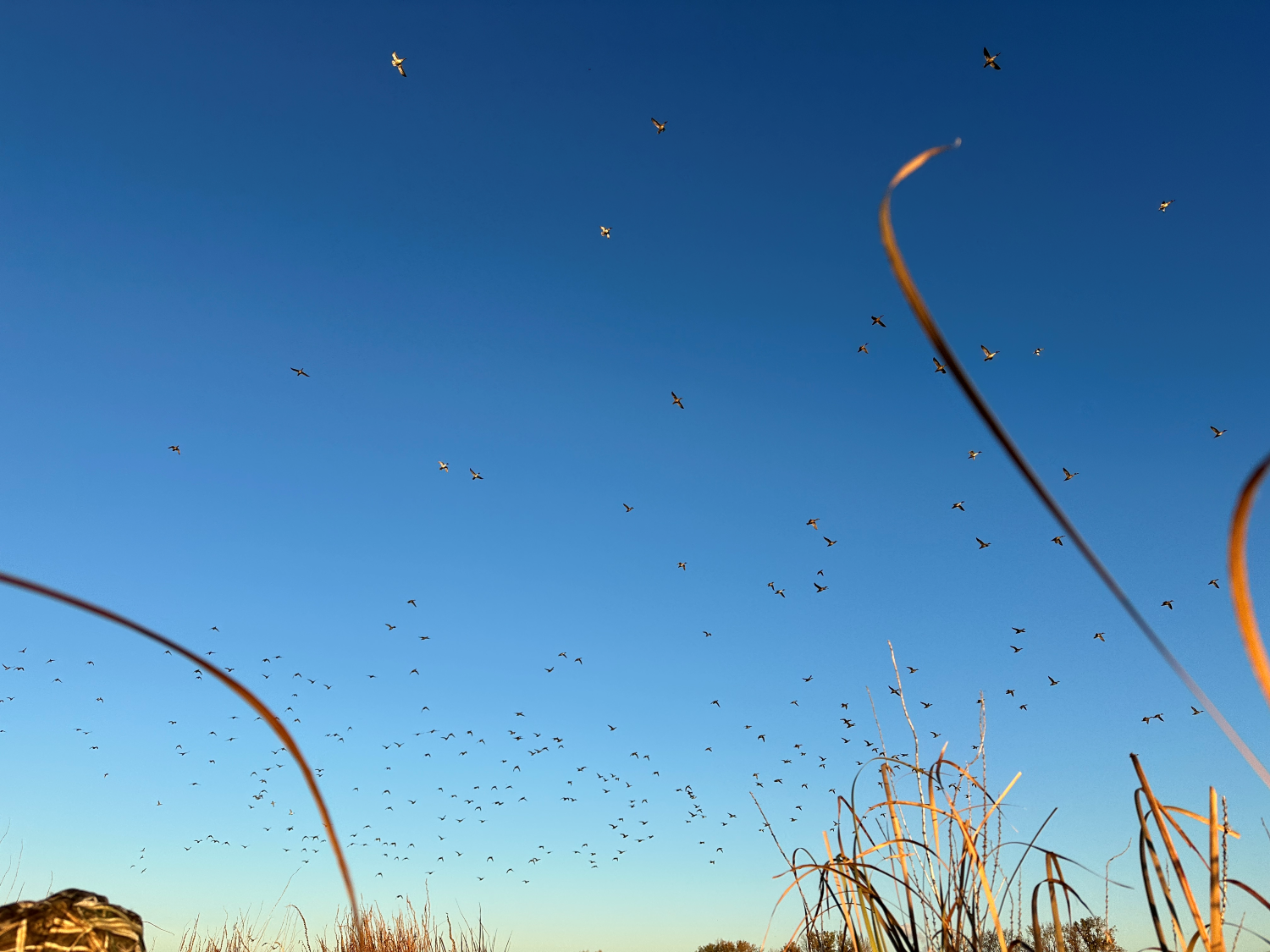
Ducks at sunrise on the Winous Point marsh.
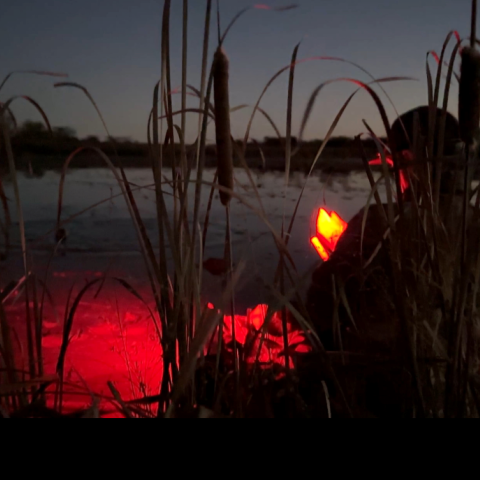
Setting up before dawn for a morning hunt at Winous Point.
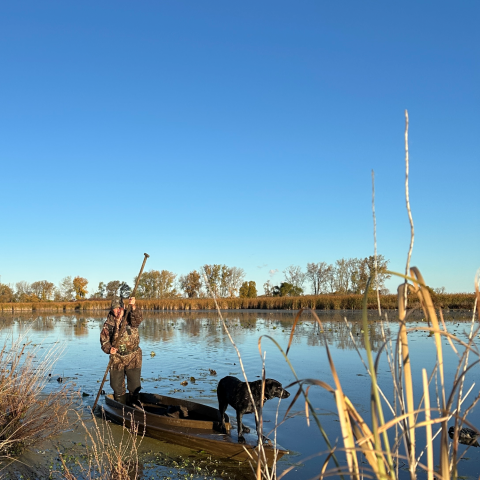
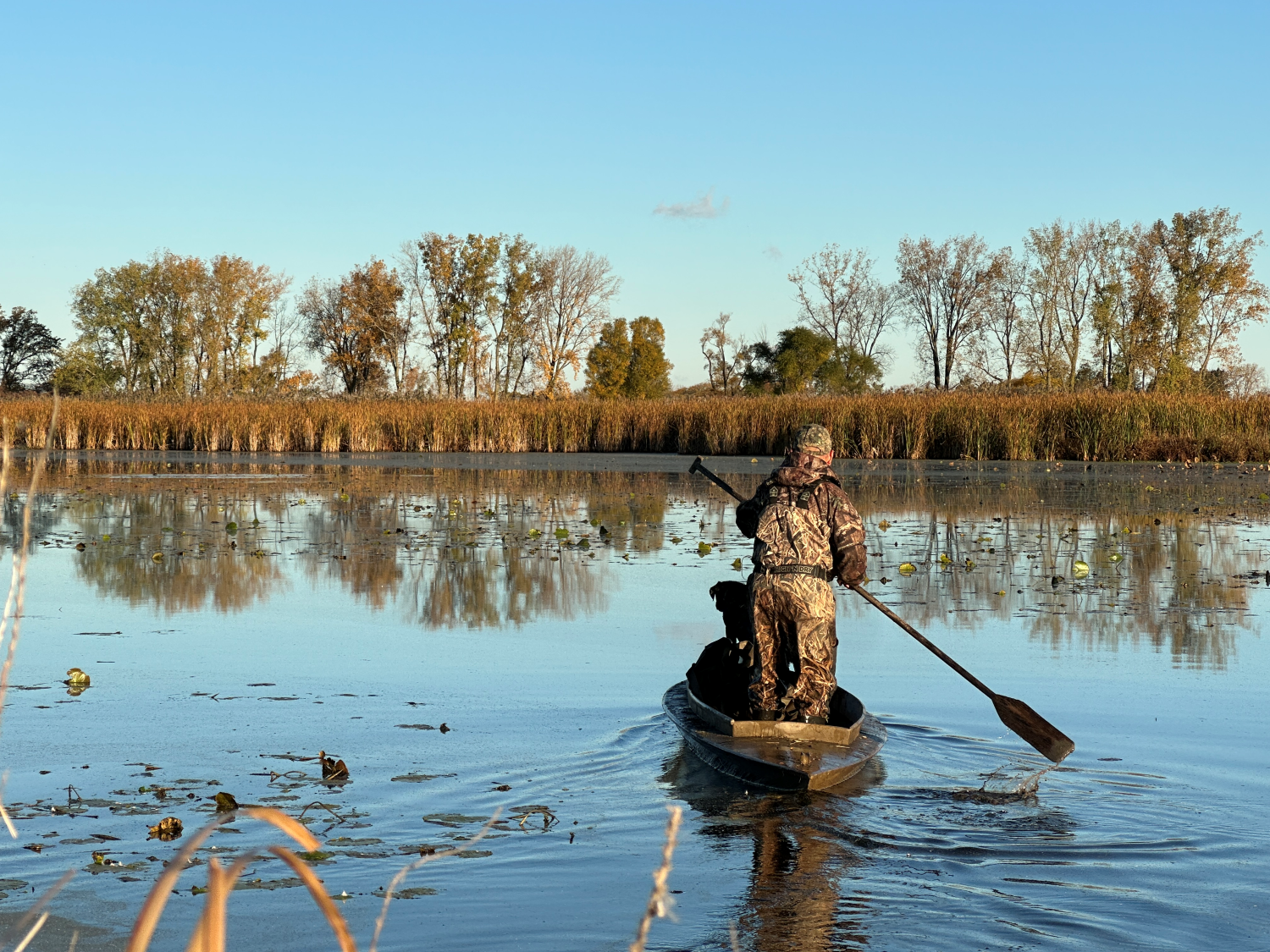
Winous Point guide and retriever traveling by punt boat.
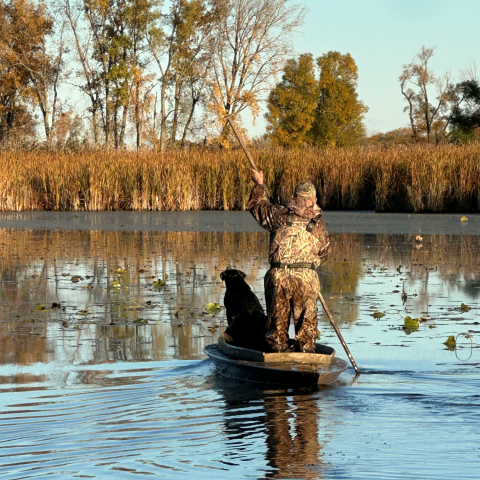
Going after a downed duck in a traditional punt boat at Winous Point.
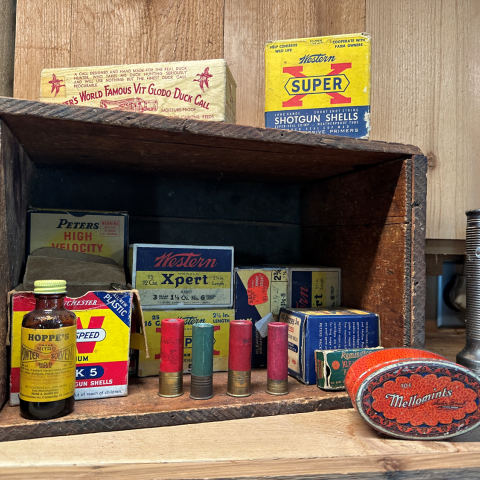
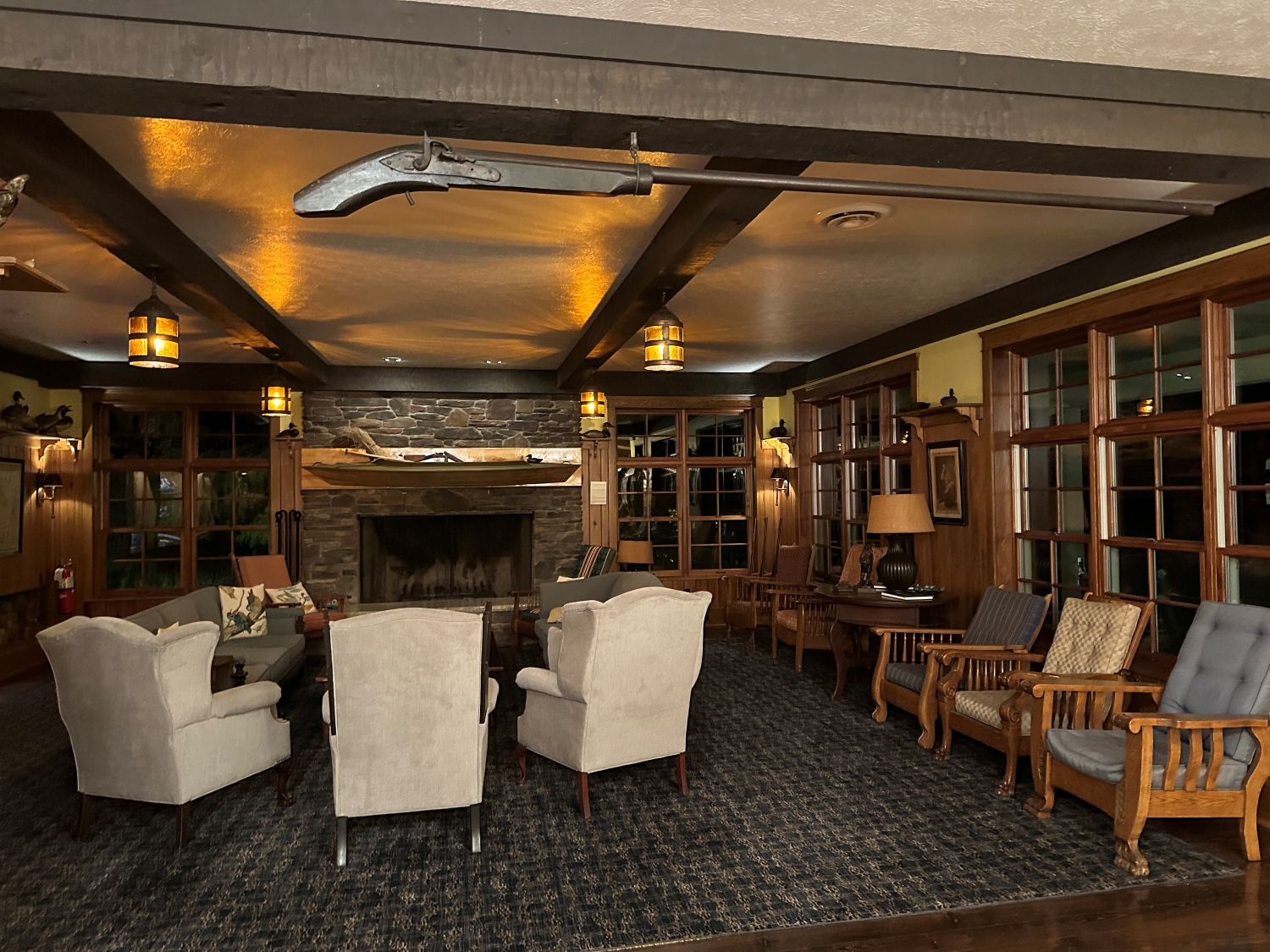
Duck hunting memorabilia at DeMars Point Hunting and Fishing Club.