The Land of The Living Skies
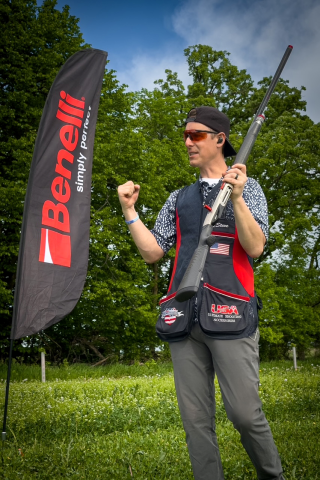
When the prehistoric-looking monster birds started lifting off the roost pond a half a mile downhill below our blind and were flapping their pterodactyl wings our way, we knew we’d hit a home run and it was about to get dirty. Their Jurassic croaking sounds split the air like they were somehow amplified, and we hunkered down, clenched our Benellis, and got ready for heavy gunfire.
A lot of people think that Canada is an automatic layup when it comes to wingshooting. Like, if you simply go up there you will bring down the heavens. . Far from the truth. It can certainly be, and the percentages are higher than in much of the lower 48, but we have been on plenty of absolute stinker hunts up there.
A veteran can often spot the signs. You bought flights, paid big money, dealt with guns at the border and transportation issues, and when you walk up to a deeply entrenched layout blind and the vegetation around it doesn’t match the field it’s in, because it’s been stomped down. You could tell the layout has been there all season, and shotgun shells are lying everywhere, you know that layout ain’t gonna lay out many birds today.
Which is why the 18-year-old high school hockey player “guide” won’t make eye contact…because he knows, too, and he’s probably a nice kid.
Other times it’s weather or a spot may be a bit off the fly away, or simply over-pressured. But even up here, it’s location, location, location.
This time, we had the right outfitter, and smoking Benelli barrels were about to be unleashed.
I’d met waterfowl-nut Mark DesRoches, founder of Prairie Goose Outfitters, on St. Paul, Island, AK, on a wild and dangerous hunt in the middle of the Bering Sea years before, and quickly saw that he was one of the most knowledgeable duck men I’ve ever met. He wasn’t guiding there, just a passionate ‘fowler on an adventure. Christian Hogg of Fiocchi ammunition had graciously set us up with a chance to hunt with him in southwest Saskatchewan last year, and the stoke was high.
Christian and I needed this one. We’d just spent a week in Alberta on a dream hunt for big bull elk with a reputable outfitter, and nobody had seen even one in a week thanks to heat and a monster moon. A little trigger therapy was in order, and we would not be waiting long.
Sure, I was thrilled to bushwhack naïve juvenile brown ducks with eggshell still stuck on their head, and also hunt my favorite bird in the goose family, white-fronts, laughing geese, barbellies…but most of us just call them specks. But waterfowling’s big game would kick off the trip, and it was about to be a barn burner, with long lines of massive cranes floating up over the barley fields right to our decoys.
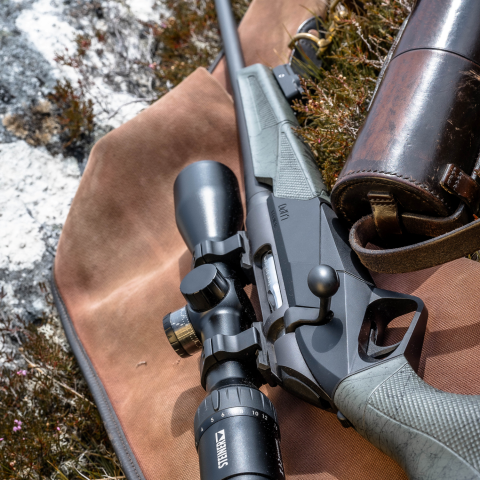
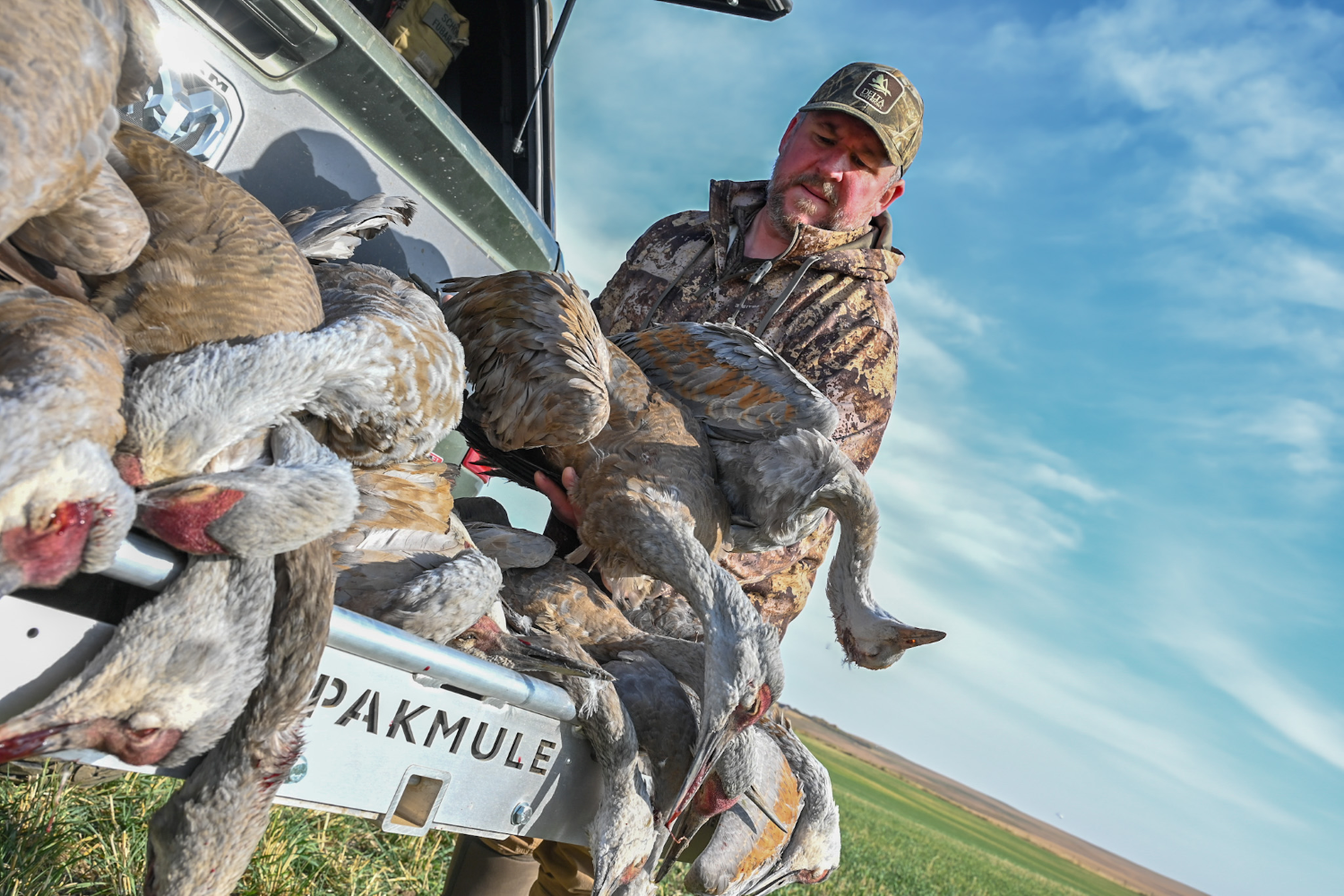
“Give them the bad news,” Mark quipped when a five-pack was within range of the Benelli Ethos Cordoba A.I. 12 gauge. We opened fire with the loads of Fiocchi bismuth and steel, and giant grey birds hit the ground…over and over again. The hunt was short and violent, the way we like it. I got called out on a “pair of singles,” as I like to joke, and doubled, crunching them both bam-bam, killing five in five shots before it was over, and a few dozen sandhills on the ground. The Benelli A.I. system is ruthless if you do your job, and the impact of the revolutionary barrel and choke system is noticeable.

But miss the head and neck, and you’d probably need buckshot. Cranes offer this good-sized head and then long neck as an excellent target, an ideal situation, compared to a duck, because there’s a lot of real estate on that neck to make up for misjudged lead.
Do your job, aim at the beak, and they go down like kamikaze pilots at a carrier. Aim at the body, like so many people instinctively do, because it’s the bigger target. They are like those B-52 bombers you used to see photos of flying back from war and landing in Hawaii shot so full of holes they are indistinguishable, absolutely shot to pieces, and yet floating in and landing as though it was a Delta flight. You have a massive, deep chunk of muscle to get through and a breastbone like a surfboard fin. It ain’t gonna happen. This leads to hand-to-hand crane fighting with crippled birds, a dangerous proposition that you might not win if you fail to dodge that dagger beak.
But with the Benelli A.I. system, we didn’t have to go toe-to-toe with any sandhills.
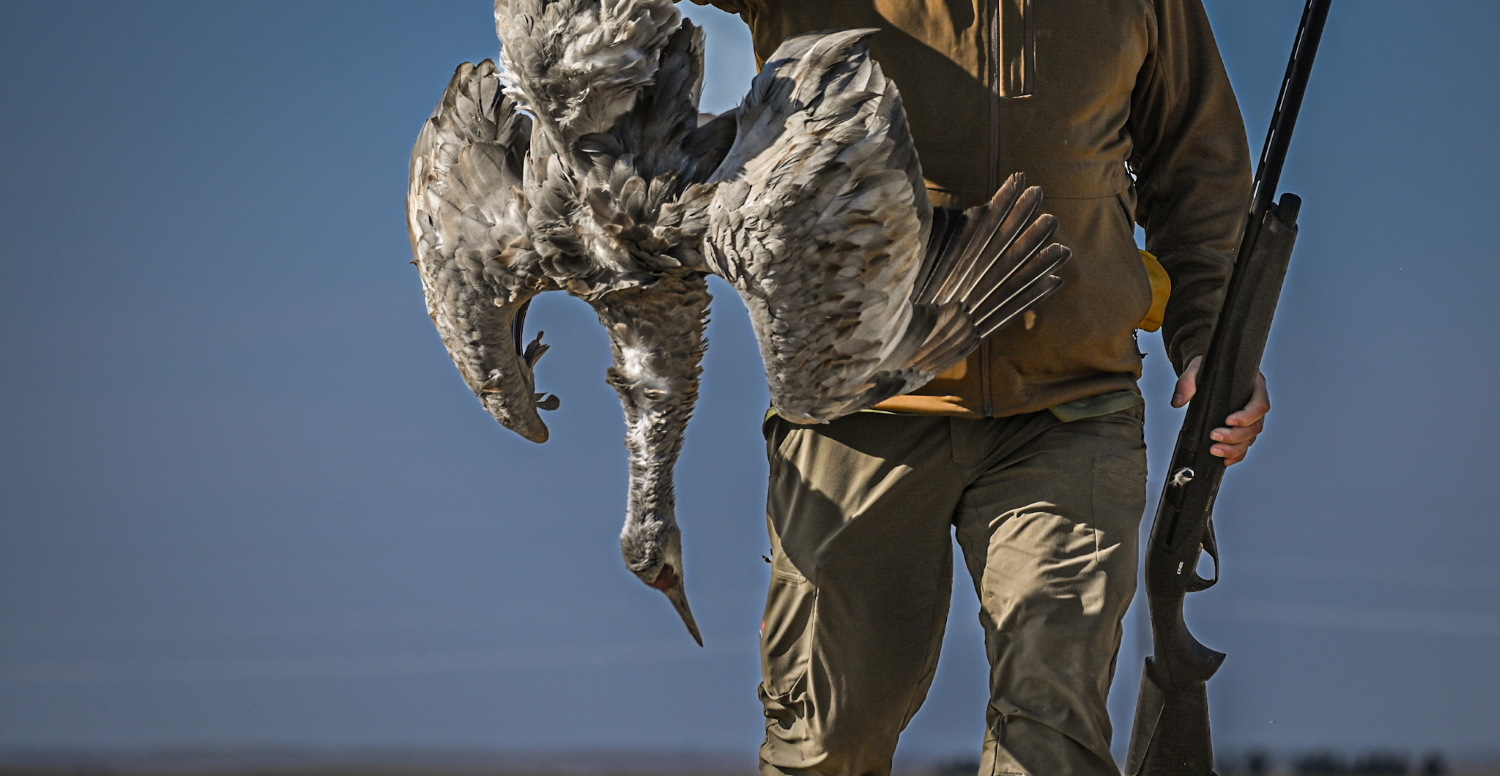
It was a remarkable hunt, and 100 percent of the credit goes to Mark. He’d scouted and selected and gotten access to the perfect spot, arranged the blind for the best shooting opportunity relative to the wind, and the results were magnificent. There was a chance we would speck hunt, too, relative to the weather. After such a thrilling crane hunt, all we wanted to do was kill more pterodactyls, and he could sense the look on our faces, and he just smiled… “Oh, you are going to like the speck hunting,” he said.
I asked him why the area is so good, and how good does it get? He responded like the amateur biologist that he is.
“For the speckled belly goose, there are three major flyways, and they all converge on Galloway Bay, and that’s just ten miles north of camp. Right above that is the Saskatchewan River, and even in a dry year, we will always have water.”
Well, that’s kind of a big deal, you know, to waterfowl.
“There is no better hunting for specks,” he said.
“With cranes it’s very similar; several flyways collide right in that area around the camp….and there is always roost water because there are so many salt lakes that don’t dry up. Cranes are fine roosting on alkaline water, and they don’t need much water to roost on,” he explained.
With an 8-bird limit for specks, that’s pretty exciting. How good does it get?
“We have hunts where waves come off the water, and it is nothing to see 4,000 to 5,000 at once. The local guys just pass shoot them off the river, they don’t bother with setups, and there’s just so many they sit in little rock blinds,” he chuckles. “Specks are the early birds, not lazy like Canadas, and it’s nothing to watch thousands upon thousands come off the river for an hour. You can scout your next hunt from your blind while watching them land while hunting your hunt.”
Scouting waterfowl feeds while hunting? Sign me up.
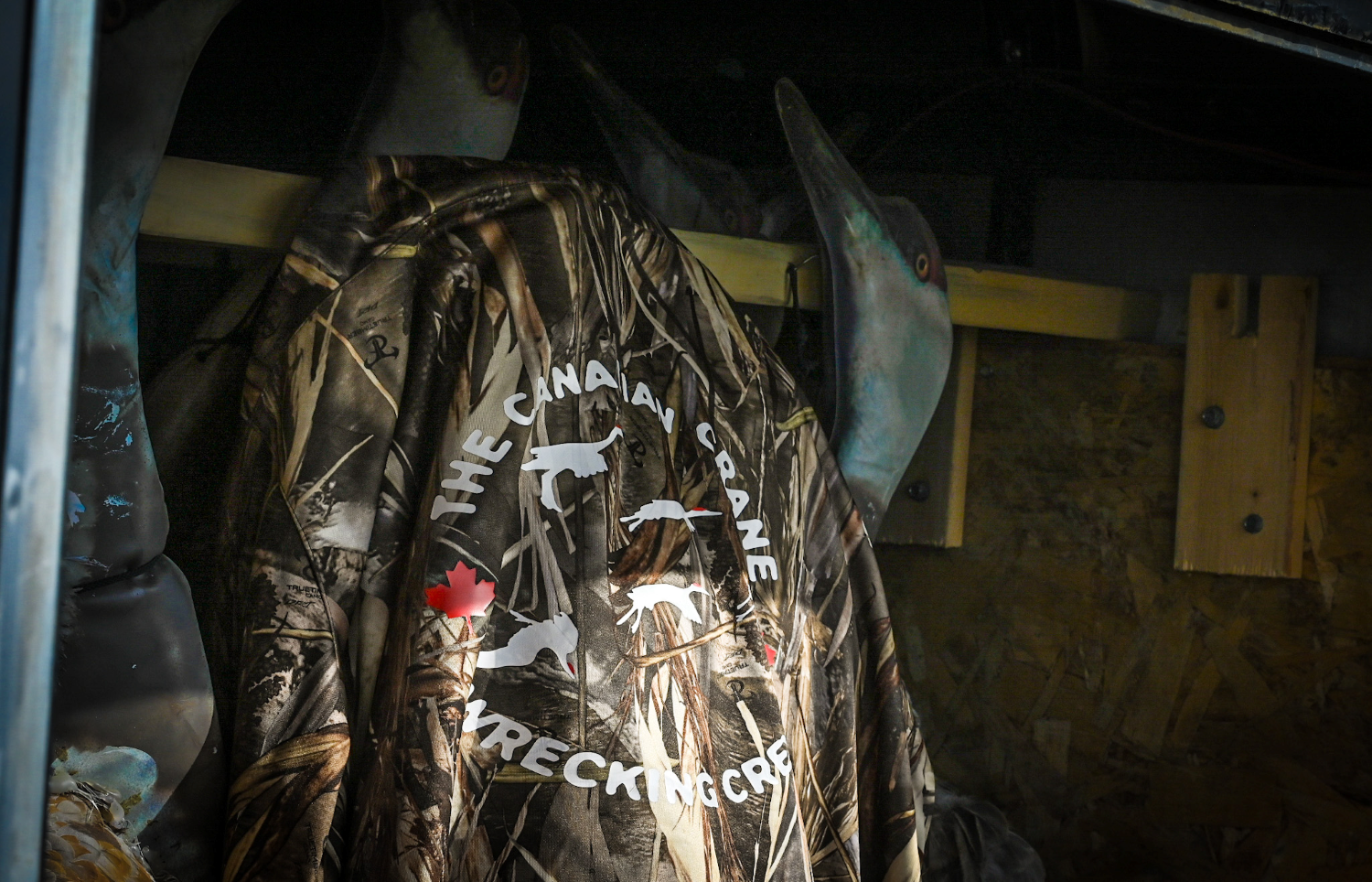
He has sold Prairie Outfitters to some U.S. folks, but he will hunt with friends up there as long as he can, with his beloved Canadian Crane Wrecking Crew. Just a bunch of friends, started in 2021. The little lodge we stayed in was like a waterfowl history museum. Antique silhouettes—some with brilliant designs—decorated the walls, along with relic decoys and gear from antiquity.
Big Jim McConville, my co-host on WILDFOWL Magazine’s Inside the Blind video series, had the time of his life on the crane hunt. The lifelike taxidermy crane decoys were amazing, and when those feathers moved in the wind, it was over.
“Like so many guys, I’d only ever pass-shot cranes,” he said. “Mark had custom-made stuffers. The guy is a five-star general when it comes to putting sandhills in the decoys. Some people use windsocks and plastic decoys. Boy, do stuffers work. On our Indian summer day, when the light hits those decoys, oh man, I thought his decoys were going to fly away. Great calling, too; he takes such pride in his operation. Those birds are tough to decoy."
Cranes live a long time, 20 years or more, which makes them wise. Mark would call with his mouth with such a trilling croak that a normal person would need stitches in their throat afterward, and then switch it up with a mouth call. And we were about to see what a great duck and goose hunter he is, too.
We woke up to a howling wind that sounded like it was trying to tear the skin off the Earth. That is no bueno for crane hunting and makes them impossible to decoy. But the killer Mark had seen the forecast and went and scouted a great pile of speckled bellies and ducks mixed together. We plunged into the morning darkness to put together the blind, hustled and got the decoys out, and we saw what the speckled belly hunting is all about.
Mark doped the wind to give us the best chance to shoot approaching birds left to right, and brilliantly situated the blind in a depression in the barley field, so we are partially out of the wind. You’d step out of the blind and up, and it would rip your hat off.
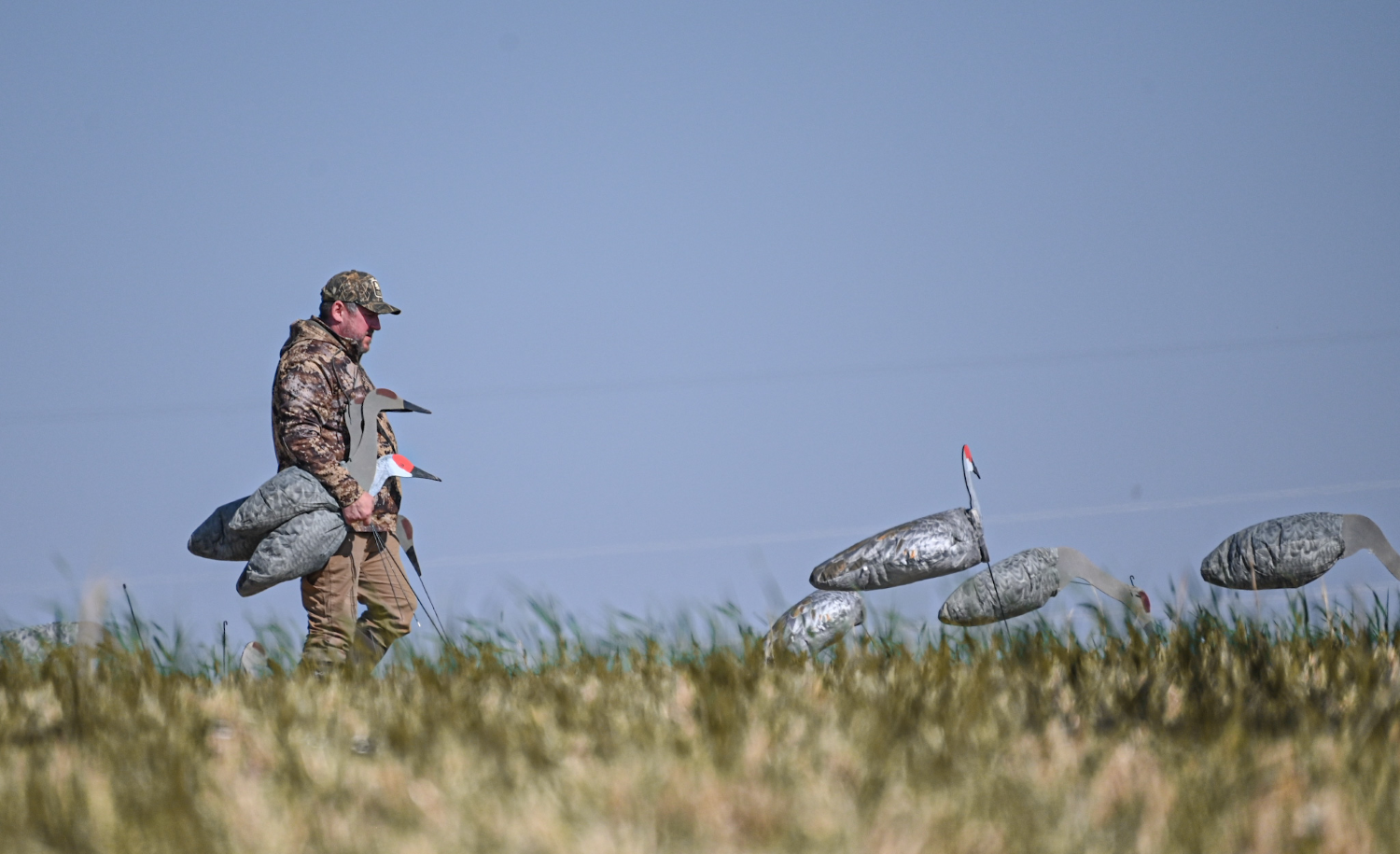
With a small spread of less than 3 dozen silhouettes and a half dozen full-body dekes, the birds sucked in, hungry and wanting to get out of that wind. We shot a limit of specks and a small pile of mallards, along with a few pintails. Some of the mallard flocks were north of 50 birds, white underwings flashing in the sun. The birds would come ghosting in from the left, bar-bellies gleaming, start to hook into the decoys, and we’d “give ‘em the bad news!”
The speck hunting is something you must experience if you’re an old-school waterfowler. I always joke that you can go turkey hunting , and hopefully get one big bird, probably not…or go goose or crane hunting and kill dozens. Both specks and cranes are among the finest eating of wild game.
In town on the last day, we had the pleasure of meeting a legend in the waterfowl world, Colleen Reynolds, better known as Miss Curly, a wizened little senior gal who did an incredible job of cleaning birds. She’s been doing it for 40 years. I asked her how many.
Around 70,000 to 80,000 birds since 1980, she said.
“I hear the first 40,000 are the hardest,” quipped big Jim.
She has wisdom and stories. She’s had so many of these reptile-tough critters come back to life on her.
“Upland is easy, ducks too,” she says. “No skin can be on birds bound to the U.S.”
Her off-season is spent on the beach in Mexico. Xtapa. “I go to sit on the beach and drink beer.”
Curly, you earned it!
Inspired that evening, I pounded and tenderized, seasoned and grilled a pile of crane filets, slicing them thin and cooking them medium-rare, the famed ribeye of the sky. It was a hit. If people knew how good they were, they’d be extinct.
“Skip made an incredible plate of protein that took our dinner to level 5,” Jim said. “I’ve had Wagyu beef at the Cut in Vegas and the sandhill is better…that sandhill needed nothing, no sauces, just perfect.”
Our second crane hunt was a repeat of the first. Jim was most geeked up to have been on two wild crane hunts over decoys. Babbling with joy.
“They have incredible vocalizations!” he said. “You can hear them for a mile. I was so jacked up…you hear a crane, you will never forget it. And that had to be a 600-acre field we watched them coming in across, Mark vocalizing with his mouth and calls,” he continued. “They are moving much faster than you realize. It takes a full payload to knock them out of the sky.”
And a Benelli A.I. 12 gauge stuffed with Fiocchi bismuth.
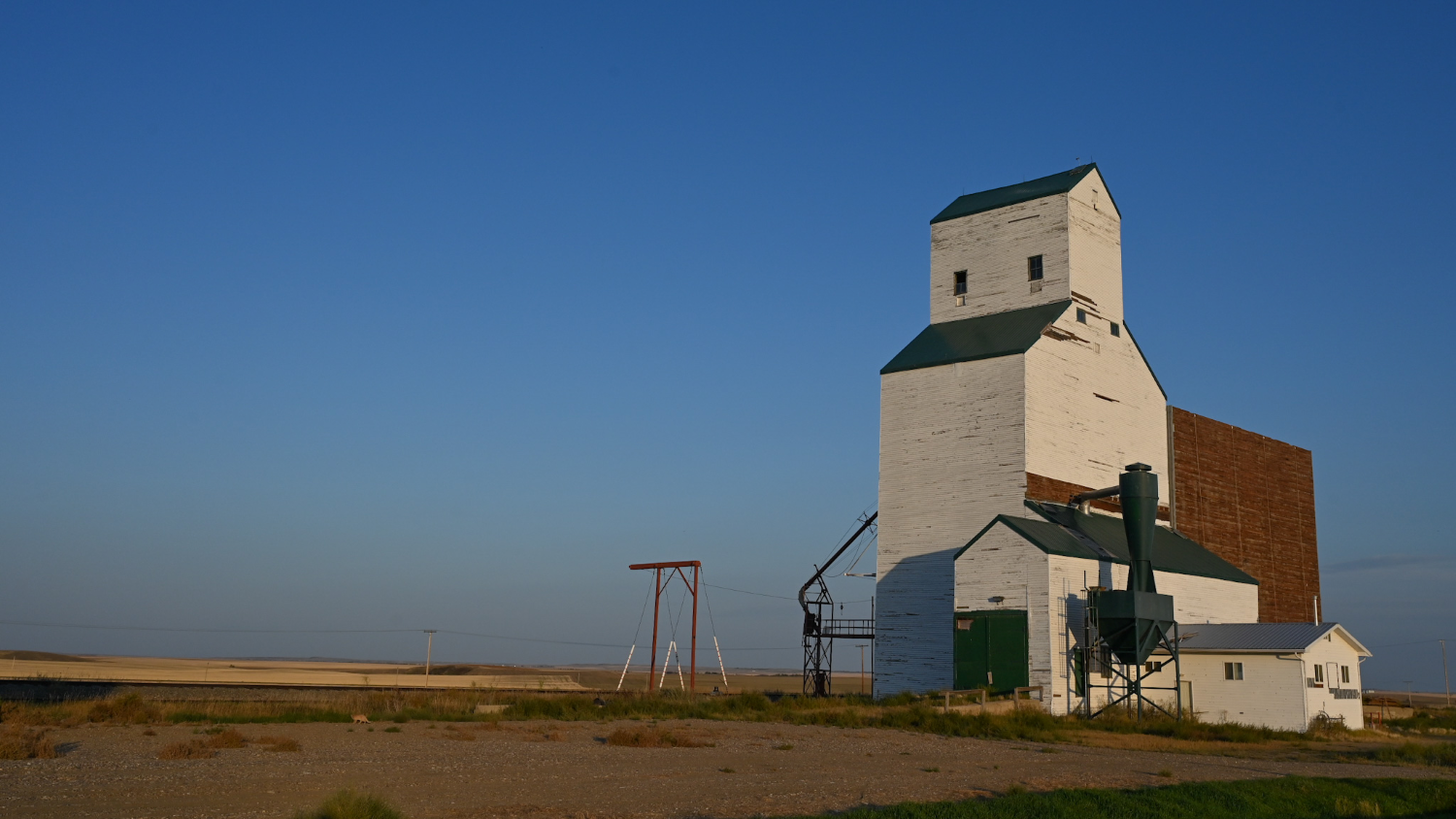
Saskatchewan’s billing as The Land of The Living Skies lives up to the hype…and we left scheming just how we’d get back sooner than later. After all, every part of Canada is not an automatic layup.