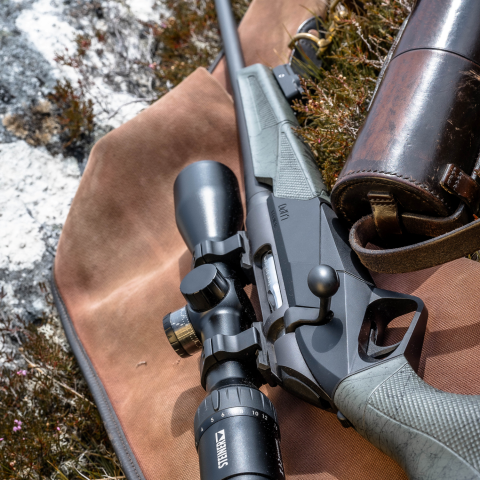
The Art of Performance -Where clinical perfection and creative rendering mesh.
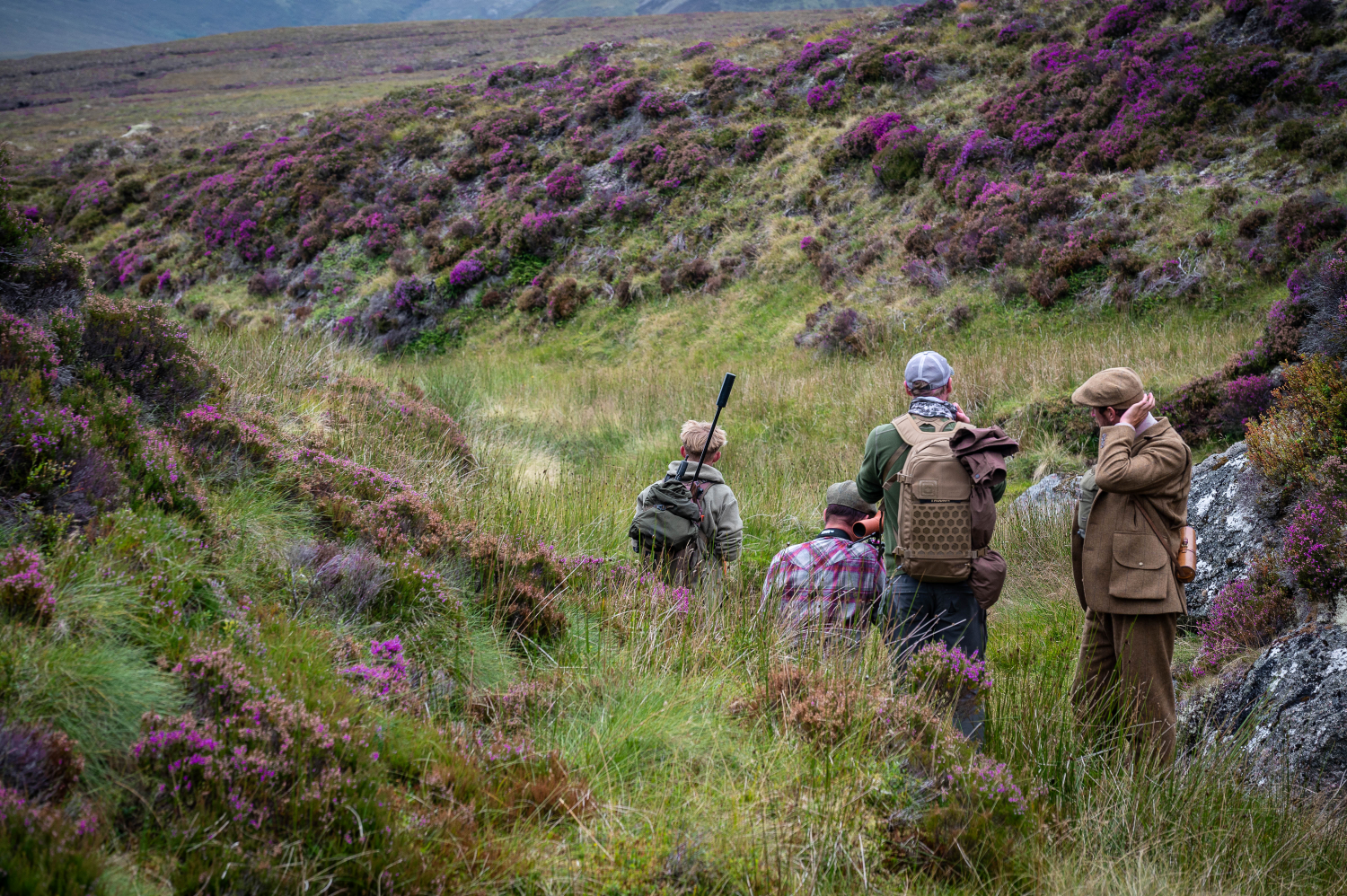
Precision rifles are, by many, deemed the domain of open-country hunters in Western America and the savannas of Africa. But as I crawled forward through abrasive, burnt-orange heather and peered over Scotland’s jagged, lichen-painted rocks into a chasm of a canyon below, hoping against hope to spot a gnarled old red stag hunkered out of the biting wind, I was glad for the far-reaching accuracy of the rifle I clutched.
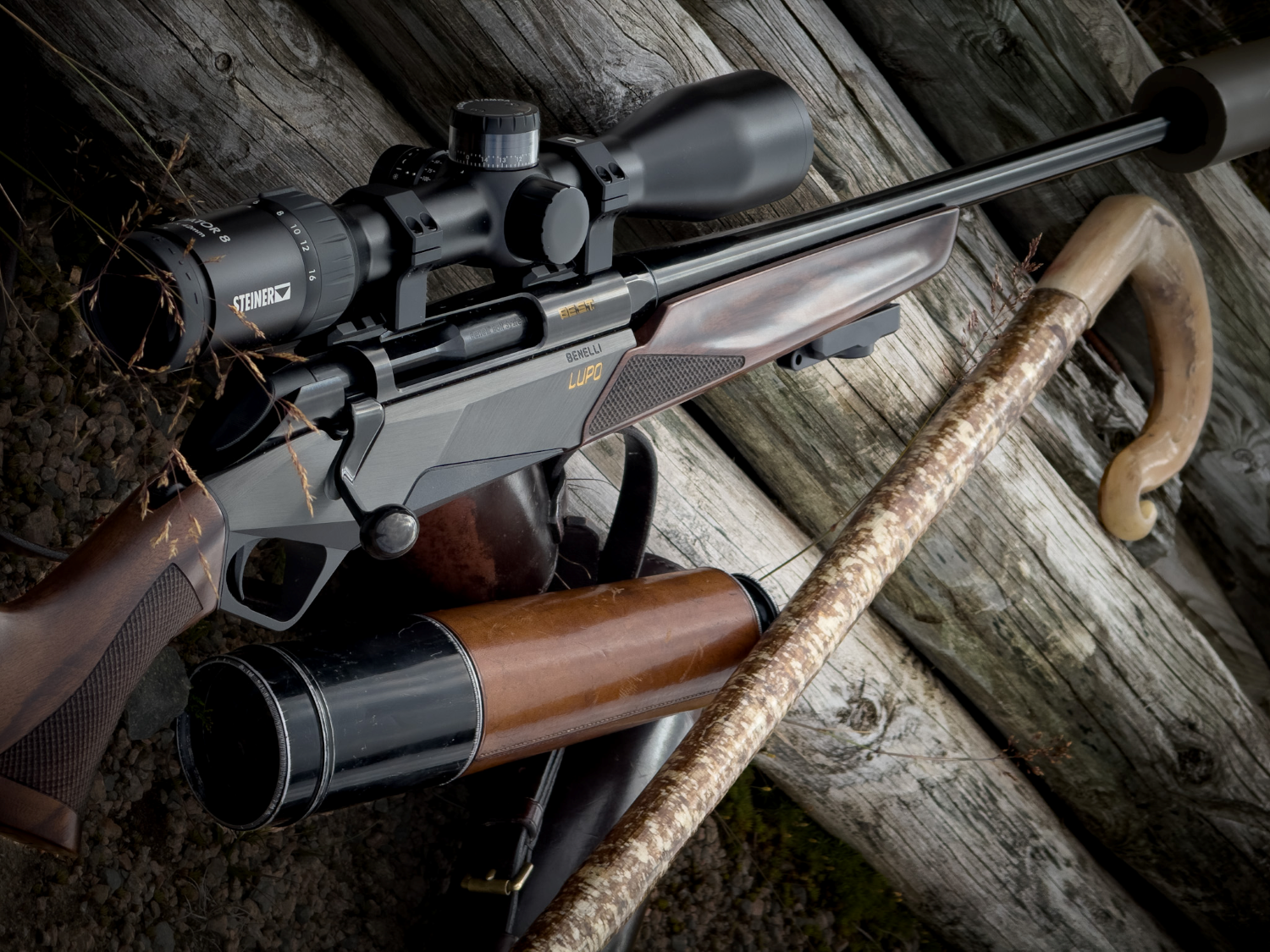
It wasn’t a typical custom long-range rifle, renowned for precision, but it shot like one. It was a Benelli Lupo. Wearing a subtle chassis dressed in very nice walnut stocks fore and aft, the Lupo action is smoother than Elizabeth Hurley, and the unique barrel is as accurate as a Hamilton pocket watch.
I’m a bullet nerd and a precision rifle geek. Technical details matter. I’ve always said that a rifle’s action is its heart; the stock is its skeleton, but the soul lives in the barrel. In the Lupo’s case, that soul is formed in a unique manner.
Benelli’s three-step rifling process is proprietary, so we can’t know the nitty-gritty, but here’s the gist of it: The barrel blank undergoes vacuum heat treatment, a stress-relieving process that stabilizes the barrel steel and aligns its molecules. The result is steel that is strong, stable, and resistant to deformation—and importantly, is incredibly consistent for the full length of the barrel.
In the next stage, the barrel’s rifling is created. Without any physical contact between the bore and the tool, an electrochemical process etches perfect grooves without imparting any stress to the steel. I’m told that, unlike every type of tool-based rifling, whether cut, button-swaged, or hammer forged, electro-chemical rifling (ECR) has no effect on barrel straightness. Plus, it results in perfectly uniform consistency.
After the ECR process, each barrel is frozen to minus 300 degrees, a process nicknamed “crio” for its cryogenic nature. This relieves any stress that has entered the barrel blank and apparently further increases durability.
The result of this three-step process is a barrel with superior straightness and uniformity, with near-perfect rifling on the inside. Durability is top-tier, and the barrels' response to heating over long shot strings is consistent. These characteristics are all beneficial to accuracy. Taken as a whole, the many facets add up to impressive accuracy potential, which has invariably proven out in the Lupo rifles I’ve seen rigorously tested for accuracy.
My trust in the Benelli Lupo rifle dated back several years, to a pre-launch event I’d had the privilege of attending in Italy. Before the Lupo was unveiled to the public, I’d traveled to its homeland and taken a backstage tour. As part of that event, I fired a Lupo at a shooting range.
It was one of the oddest shooting experiences I’d had, wherein each journalist stepped up to the bench, was handed three rounds of .30-06 ammunition, and was instructed in the loading, functioning, and firing of the Lupo before being ushered on to see the next product. To say it was a brief encounter with the Lupo would be an understatement. However, while waiting in line, I had the opportunity to watch three or four writers in front of me shoot groups between one-half and one inch at 100 yards. My own three-shot group followed suit, measuring about five eighths of an inch. I moved on down the line with the thought that this racy-looking new rifle might just be the most accurate hunting-weight .30-06 rifle I’d seen.
A few months after the event in Italy, a new, unfired .30-06 Lupo right off the production line showed up at my place for review. Exhaustive testing with several vastly different types of factory ammunition confirmed my impression was correct; every single load produced shockingly small groups. I’m a huge fan of the .30-06 cartridge, but in my experience, few rifles chambered for it regularly produce near half-MOA averages with multiple types of factory ammo. This one did. Sending that rifle back home to Italy hurt.
Fast forward a few years, where I took a second Lupo chambered in .300 Win. Mag. to Argentina, where it put 200-grain Hornady ELD-X bullets through the sweet spot on wild boar, blackbuck, and a very good red stag. It, too, was more accurate than I’d expected.
A third Lupo rifle accompanied me to Scotland a few years later. This time, I handloaded Swift 180-grain Scirocco II bullets for it, and no surprise, bullets fired from it clustered like amorous flies atop the X-ring in my target.

Flights to Inverness, Scotland, connect through Amsterdam. We landed late in a tiny airport and scoured it for an official to check our rifle paperwork. Apparently, he was wisely at home sleeping. A midnight drive past Loch Ness and the battlefields of Culloden and into the Highlands, and a bleary-eyed breakfast later, I found myself at the rather lovely sight-in range on a Victorian-era estate.
While waiting my turn to lie in the damp moss and prove myself to the watchful gamekeepers that would escort us into the high country, I asked media rep and host Mark Sidelinger if he could tell me why all Lupo rifles seem to shoot so well. “It’s a combination of several factors—really, they’re just designed and built incredibly well, holding tight tolerances in every step of the manufacturing process. Another part of it is that its action is bedded into a unique chassis/stock system, though the stock doesn’t look like a chassis. Even as important is the unique process they instituted for their barrel manufacturing.”
Back to the task at hand, a gamekeeper summoned me to the shooting position. I hoisted my bagged Lupo. Belly down on the moss and heather, I chambered one of my Swift 180-grain Scirocco handloads and planted a smear of lead in the center of the 200-meter vital-size steel gong. Dialing for 300 meters, I repeated, and bullet by bullet marched my way out through the 500-meter target. Through 15 hours of flight time in the belly of a plane, bracketed by hours bumping over country roads on each end, the Lupo had held its zero. I wasn’t surprised.
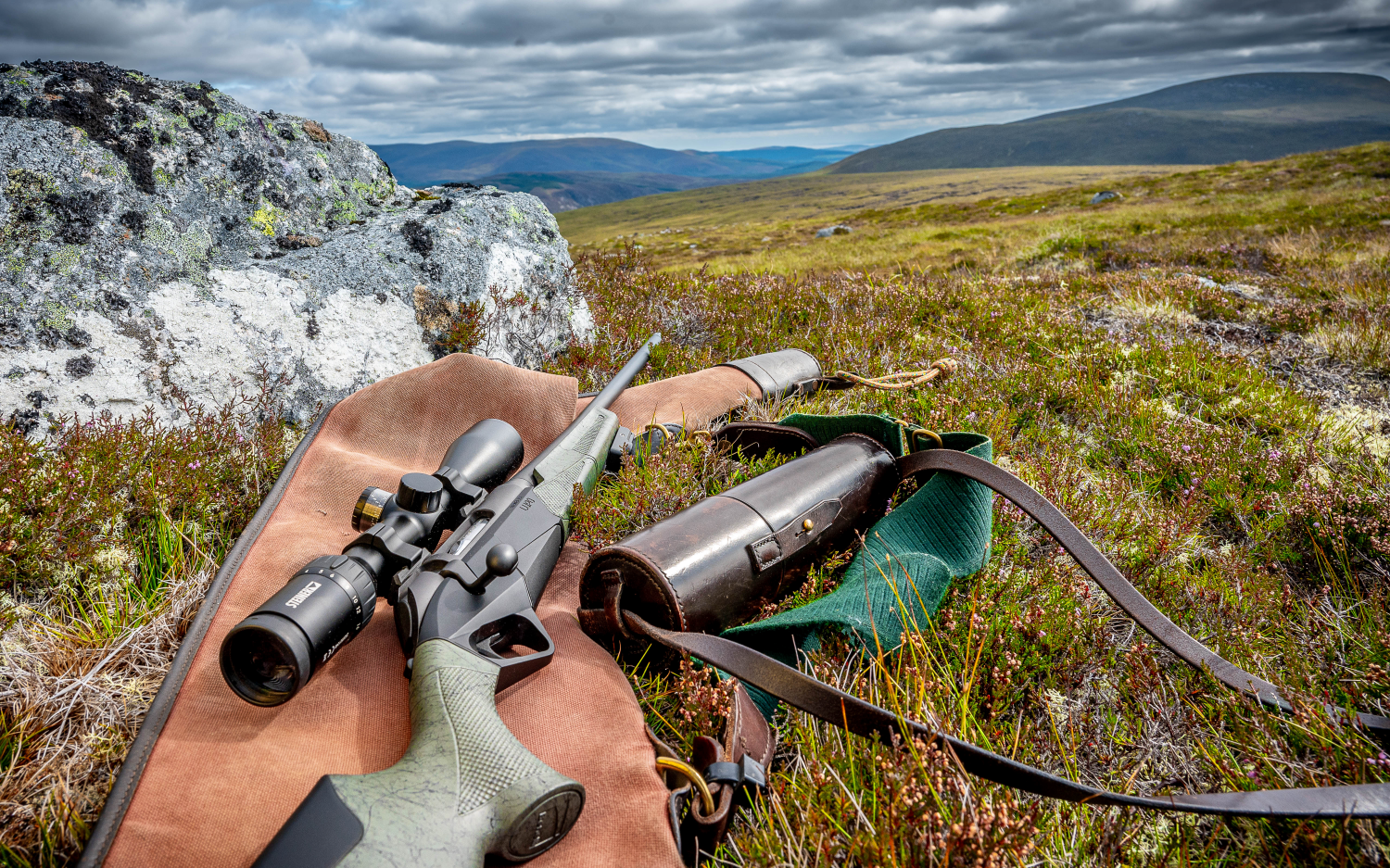
A week later, we sat on the knife-edge ridge in the Highlands. The canyon was wide and deep, with many clefts that a savvy old red stag could be sheltering in. No such luxury for me or the game stalker or the ghillie who’d unzipped the waxed canvas rifle case and slithered the Lupo into my outstretched palm just before we peeked over the ridge. It was our last day hunting, and clear visibility was more important than comfort.
Unseasonable heat had hatched tiny biting midges into black clouds of torment, and the free-ranging red stags had gone full caribou and migrated to high rocky outcroppings that gutted the Highlands’ blue-and-gray-patched skies. Midges can’t fly in fierce winds, and I empathized with the red deer, shedding my head net and turning my face into the small gale with relief. Vast as the estate we were hunting was, it comprised prime summering habitat for red deer; plentiful green feed sweeping across verdant valleys and swales, but very few high rocky promontories. In a last gasp effort to find one of the stags escaping torment, we’d hiked for hours out across the highlands and finally scaled into midge-free terrain.
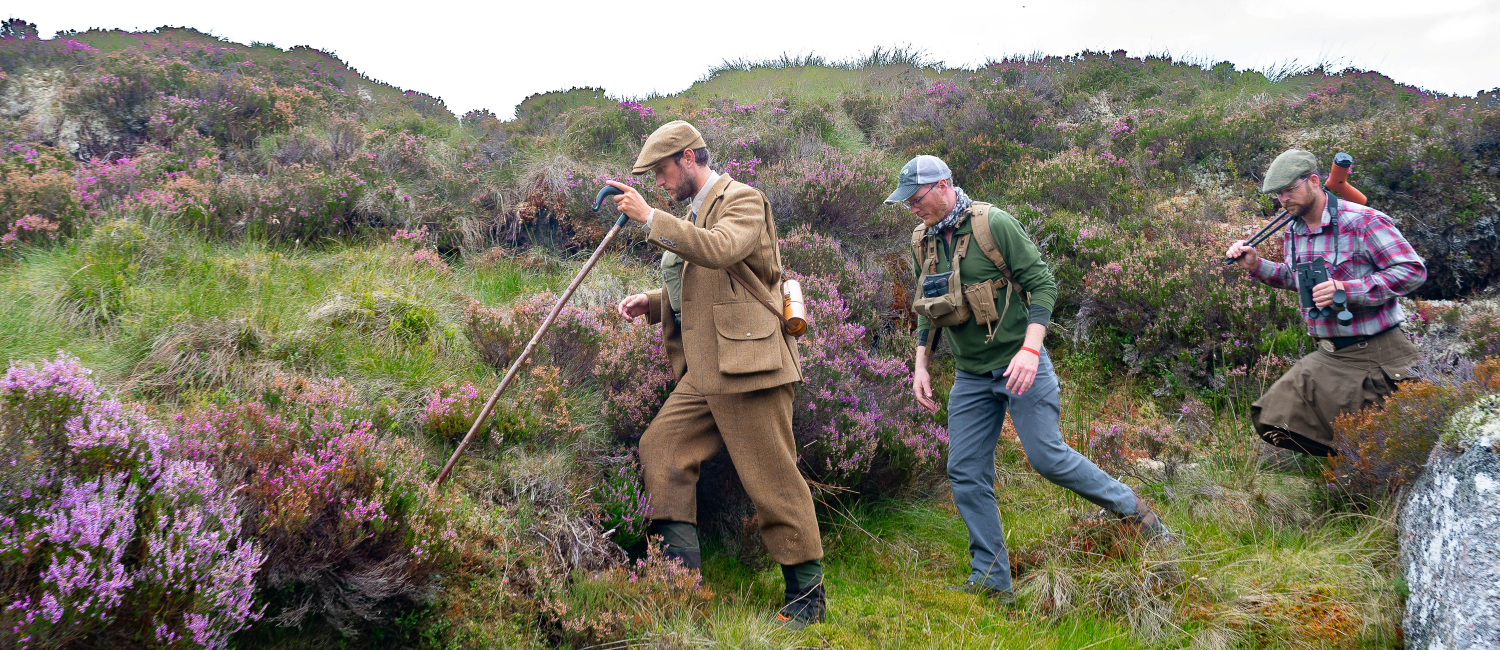
Attempting to keep a low profile but urgent as the hours marched on, we glassed, probing every hollow we could see. My practical side told me that our chances were slim, but I also knew that if we were to find a stag, the .300 Win. Mag. rifle was up to the task of bucking the wind and reaching far.
As evening approached, the wind died, allowing a few overachieving midges to find us, rocky terrain and elevated position notwithstanding. Stags, true to form that week, did not show.
Solemnly, we slid our accurate but unused rifles back into waxed canvas cases, tightened our bootlaces, and turned for the lodge and a warm hearth.

Many miles across rasping brush-like heather and through Scottish brambles had scuffed the surface of my Meindl boots raw, but my spirits were uninjured. That’s hunting, and the occasional lack of success makes triumph all the sweeter when it comes.