For The Love Of Ducks
Dropping two ducks as they coasted the decoys, I swung on a nice drake, confident of a triple. It was moving slowly from right to left, my favorite side angle shot. I missed. “Oh no, what happened?” Shouted my buddy who’d already slowed it down with a hit. I didn’t acknowledge him. Both our guns were empty.
I’d just blown a chance at firing seven shots and killing a seven bird limit. The duck picked up speed and flew away. It was a tiny dot in the distance when I realized my mistake. I led the bird too far.
When the flock approached, they banked hard. The first two shots came naturally, with a smooth, comfortable swing. Trying to cleanup that third bird, I swung ahead of it too quickly. It was a 40 yard shot. Should have been simple. In a way it was a good miss because I learned from it. The gun and load I was shooting spit tight patterns and was pushing loads, fast.
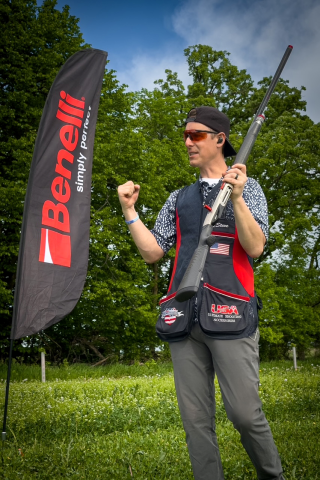
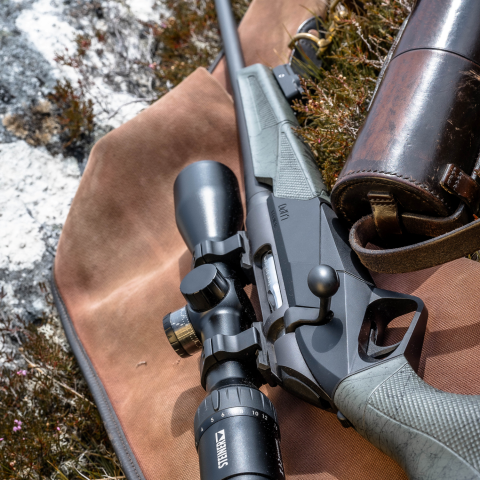
The next pair of pintails that came in offered redemption. One shot at a drake and it folded. It was my first hunt with Benelli’s new Super Black Eagle 3 A.I. I fired eight shots and secured seven birds. It marked the start of what’s becoming a good relationship with that gun.
The Bog
My first hunt with the SBE 3 A.I. took place in the wide open, a great test for the gun. The next hunt with the A.I. technology would be just the opposite.
“The Bog is loaded, let’s hunt it tomorrow,” came a text from my buddy, Austin Crowson. We’d been getting hammered with rain, and river levels had quickly risen. Crowson had set a trail camera on the slough of a river, one he dubbed The Bog. When it flooded, ducks poured in. Mallards, wood ducks, wigeon and a few green-winged teal were all showing up on trail camera. Even some ring-necked ducks were filing into the back end of the slough. The following morning was go-time.
We hiked across a rye grass field, each with a little bag of decoys over our shoulders. Echo, my pudelpointer, followed. It was the first time hunting this spot, for all of us.
We hiked toward a river in Oregon’s Willamette Valley, not far from where both Crowson and I grew up. Crowson is about my son’s age, mid 20s. Five years ago we adopted one another as hunting partners. This is his 19th season of hunting waterfowl. It’s year 49 for me.
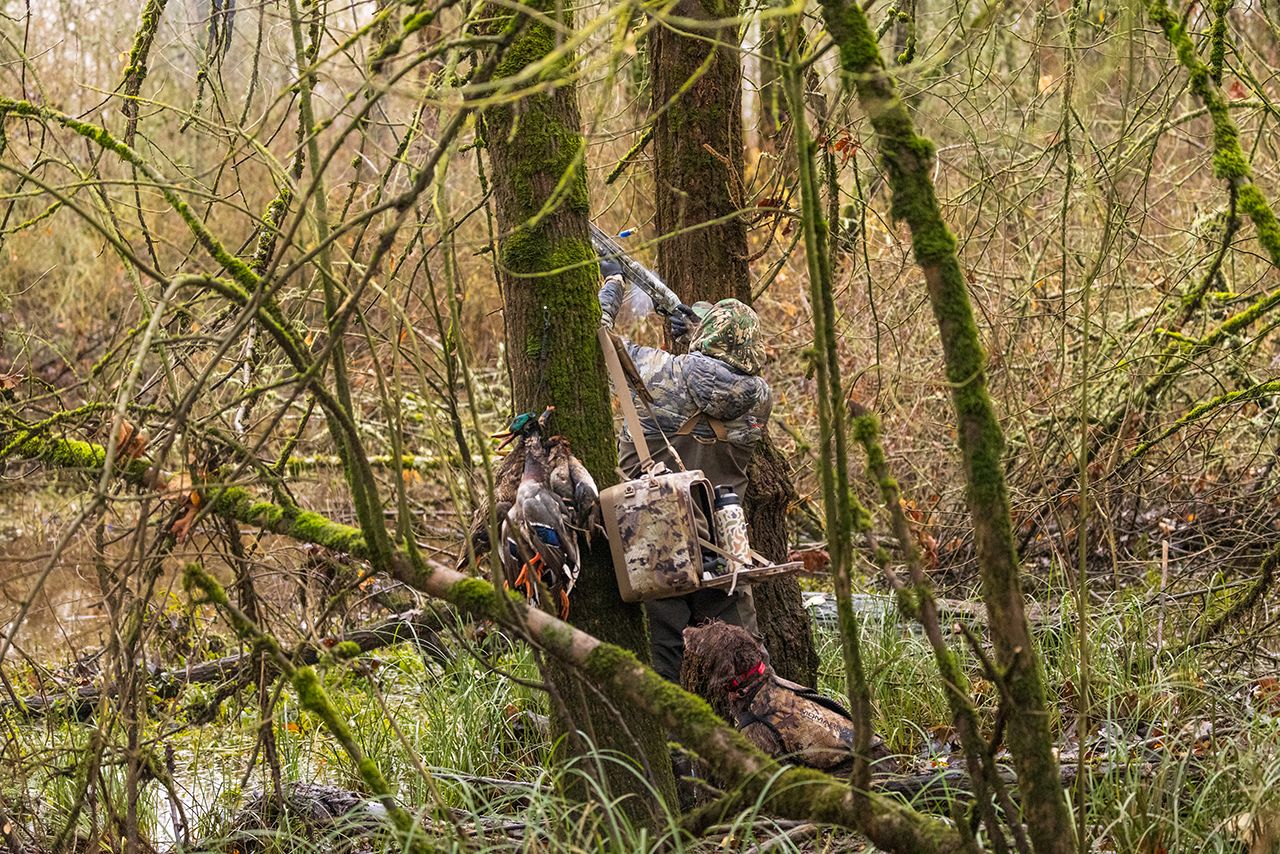
While Crowson tossed out decoys, I opened a couple shooting lanes by clearing brush. It was the Pacific Northwest’s version of a flooded timber hunt. Towering cottonwoods lined both shorelines, typical of river bottom habitat in the valley. Over the years, many trees along water’s edge had rotted and fallen. Some were cut down by beavers. I sawed and broke limbs as best I could, creating narrow shooting lanes for both of us.
“Mallards should funnel in from above the tall trees, but the wood ducks will come in fast, so be ready,” Crowson offered as we got settled behind the trunks of fat cottonwood trees. No blinds were needed.
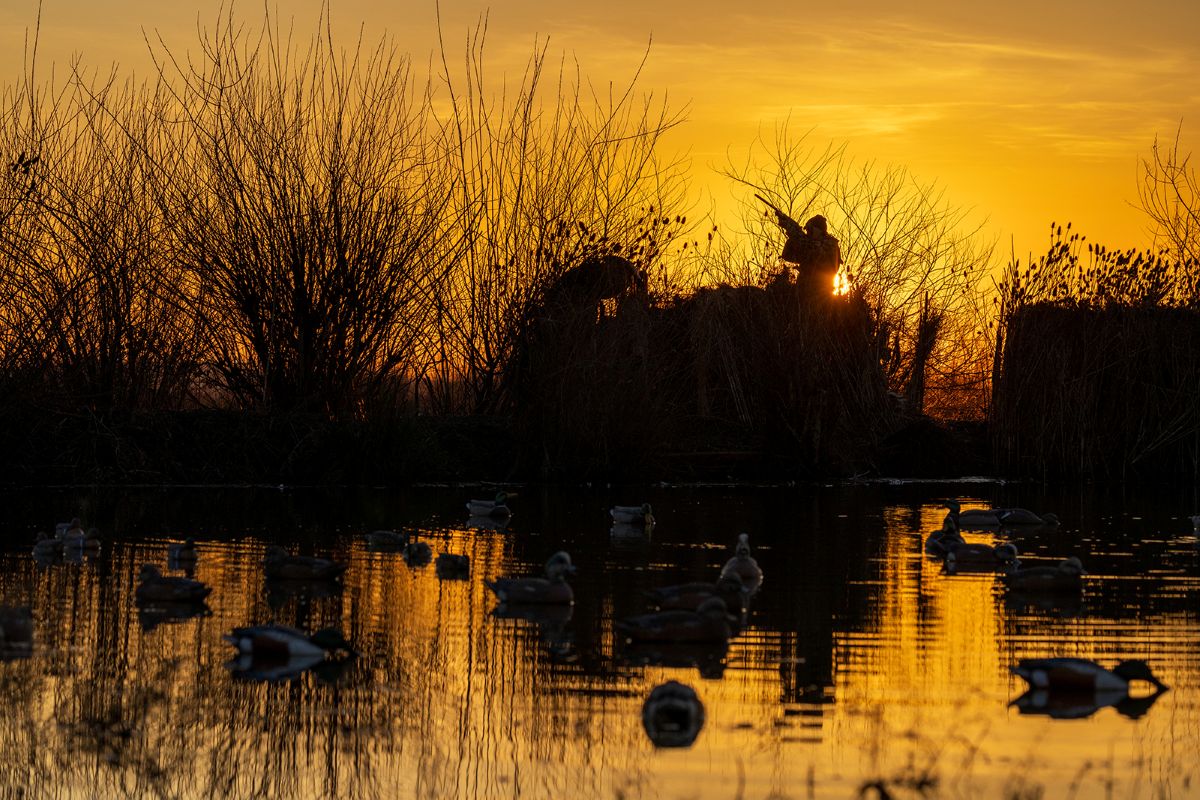
There were two landing holes about 30 yards apart. Crowson hunted one, I took the other. Thick brush and toppled trees separated the two holes. On some of the fallen trees, Crowson staked some Big Al’s mallard silhouette decoys to them. These elevated decoys were the ticket for lighting up the spread in the dark habitat of the early morning. There was only room for a dozen floaters in each hole, and that was tight. I had a single floater on a jerk cord while Crowson had three on a string. Motorized decoys are prohibited in Oregon so we come up with ingenious ways to create movement in the spread. It doesn’t take much. Sometimes standing knee-deep and kicking water is all it takes to convince ducks to commit.
Ducks were landing in both sets of decoys before shooting light. Hearing the lazy calls of hen mallards and the wings of wood ducks slicing through the air, made the morning a success, and we’d yet to fire a shot. It was too dark in the timber to see woodies that came in low, but splashes of white water confirmed where they were. Their shrill whistles brought in more ducks. We were where ducks wanted to be. We’d found the X.
“It’s shooting time,” said Crowson over a flurry of wood ducks that splashed into the decoys in front of me. When a pair of mallards dropped straight in from the tree tops, Crowson crumpled both. I dropped two wood ducks as they jumped and sped by.
In less than an hour we were picking up decoys. Crowson shot all mallards and one wood duck. The woody drake he got was banded. Echo proudly retrieved it. I swear she knew it had a band.
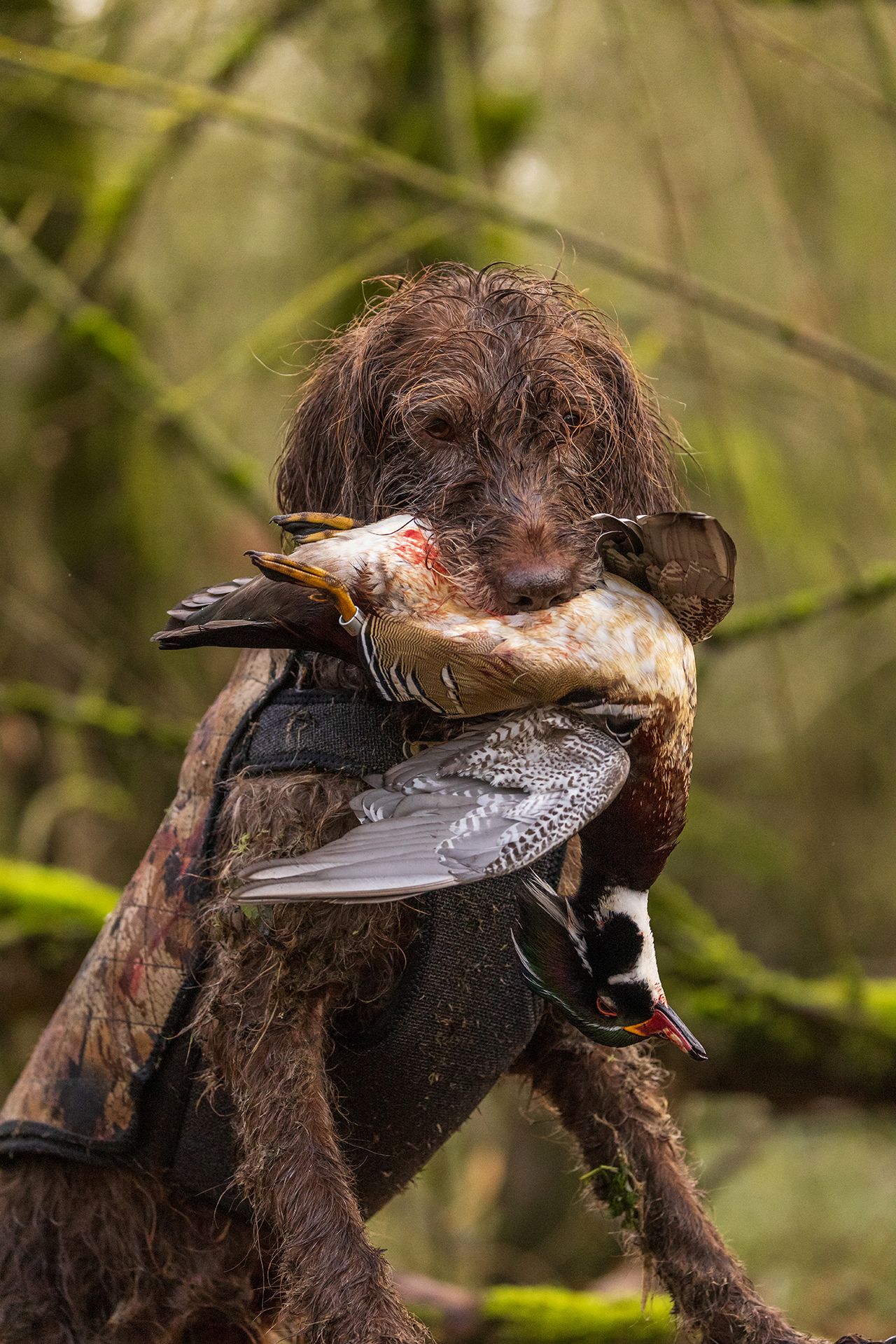
I shot a limit of wood ducks, intentionally. Shooting mallards at point blank range is fairly straightforward. I wanted challenging shooting at various angles and speeds. I was still testing the new A.I. system. I left the bog, impressed. Very impressed.

Wigeon Quest
Two days later Crowson and I hunted a flooded farm pond. We were 12 miles from where we’d hunted the slough. There was no food growing in the newly flooded pond, but there was lush, green, rye grass in surrounding fields.
Oregon’s Willamette Valley is dubbed the Grass Seed Capitol of the World. When temperatures near 60º in November, rye grass begins to grow. By the middle of duck season–when birds from the North arrive in the valley–countless acres of fields glow green. Rye grass is a top food source of wigeon, our target bird on this day.
Wigeon fly around the valley, grazing on flourishing rye grass. They rest on nearby farm ponds, in flooded fields, ditches, creeks and rivers. Flocks of 5,000 wigeon are the norm, with twice that many routinely being seen. Scouting and trail cameras revealed wigeon to be grazing near the pond we hunted.
We tossed out two dozen floating wigeon decoys, arranging them as if they’d landed in the middle of the two acre pond and were swimming ashore to graze on nearby green grass. On the shoreline were five dozen wigeon silhouettes, spread out in a grazing pattern.
We try picking drakes when hunting wigeon. As a species, the football-shaped ducks are easy to identify. When backlit, the silhouette of a drake’s head is noticeably fatter than a hens.
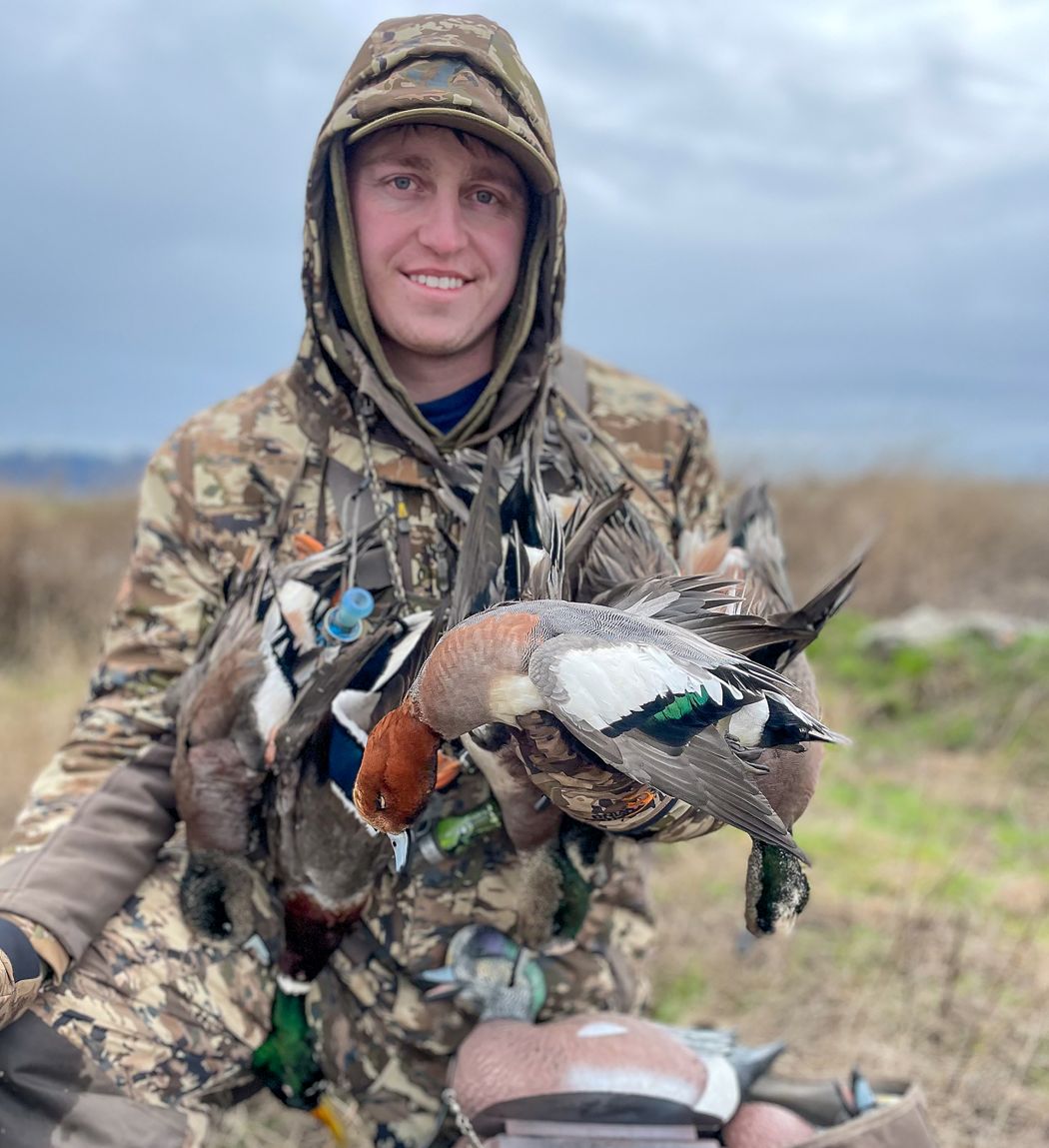
“Man, these make me want to become a taxidermist just so we could shoulder mount every drake we shoot,” Crowson smiled, looking at our little pile of drakes. “Every one is so different.” We have that conversation multiple times throughout the season.
Two hours into the morning hunt, Crowson tainted our pure wigeon limit. “I couldn’t resist, that thing just came in too perfect,” he said of the nice greenhead. I thought about shooting. Crowson beat me to it.
The day was a good test for the new A.I. system. Winds held steady between 13-18 mph, with gusts eclipsing 25 mph. It wasn’t easy shooting conditions, but with this gun my leads were noticeably shorter than I was used to with a gas gun. My ability to swing, shoot and stay on birds, even as they rapidly gained elevation and distance with the wind, was easier.
I ended up with a seven wigeon limit, unintentionally dropping a hen I didn’t see banking in behind a fat-headed drake. Crowson continued to tarnish the American wigeon bag, but in a good way. It’s why we shoot drakes.
Crowson’s second to last bird of the morning was a stunning Eurasian wigeon. I hunted the valley for 45 years before shooting my first Euro’. I now have seven to my credit. Crowson has more than a dozen. Of the Euro’s we’ve shot together, Crowson and I have only identified three as such, before the shot. They’re usually backlit so no colors show. But Eurasian wigeon have a unique whistle that’s easy to identify. Crowson heard that whistle as the flock circled overhead. It took three rounds in high winds for the wigeon to finally reach the decoys, and when they did, Crowson picked the fattest drake out of the small flock. It was a copper top. We have all our Euro’s mounted, something we each vowed to ourselves as young hunters, years before we knew one another.
The Journey Continues
Last year Crowson and I hunted four states together for waterfowl. We’re looking to hit five this season. Counting the hunts near home, we’ll spend over 50 days chasing ducks and geese. As a team, we also hunt spring and fall turkey and Columbia black-tailed deer. We spend the off-season building blinds, making ponds and trying to find more places to hunt ducks.
Though he’s less than half my age, I learn a lot from Crowson. He’s a young generation of duck hunter who lives and breathes the sport. He’s a thinker. He hunts aggressively and knows when to make moves. Even before a hunt begins he knows what adjustments he’ll make to the decoys if birds don’t work in as planned.
Soon we’ll be packing our bags, taking a break from the rainy Pacific Northwest, to hunt whistling ducks in sunny Florida. After that it’s off to California, where surf scoters from layouts are on tab in San Francisco Bay. Then it’s back home, chasing wigeon and more before heading to Arizona in search of cinnamon teal and Mexican mallards during the final week of the season. We’ll be taking our new SBE 3 A.I.s on all the journeys.
Note: Scott Haugen is a full-time writer of 25 years. Learn more at scotthaugen.com and follow his adventures on Instagram and Facebook.