Downpour On the Delta
Rain on the roof of the Kirchhoffer Lodge roused me well before the alarm. Far from dampening my spirits, it whetted my excitement. This was a hunt I’d dreamed of for half a lifetime. Today was my first time in Manitoba’s hallowed Delta Marsh.
Ducks love this weather, so the sound of rain was music to my ears. Besides, we were shooting the BE.S.T.! Benelli Surface Treatment protected my shotgun, so I knew I didn’t have to baby it in the wet. Because the SBE 3 was made for extreme conditions, I was ready for whatever we faced.
Weather Check
The radar map showed an extensive rainstorm tracking slowly northeast across the south end of Lake Manitoba. We were going to get wet—at least at first light. Equipped with a Benelli Super Black Eagle 3, the latest loads from HEVI-Shot and waterproof outerwear, we set off.
Over the years, I’ve discovered that the most memorable waterfowl hunts happened in foul weather; a Benelli Super Black Eagle has been a reliable companion on many of those adventures.
I was ready to endure the worst to experience diver hunting at its best.
Seeing and Believing
Part of my fascination with hunting Delta Marsh stemmed from my long-time connection with Delta Waterfowl. As a member for nearly two decades and an occasional contributor to their magazine, I wanted to see where it all began. Opportunity knocked. Paul Wait, Senior Manager of Communications for Delta Waterfowl, invited me to hunt and experience the ‘birthplace’ of Delta Waterfowl. I leaped at the opportunity.
I live only a short drive west in the neighboring province of Saskatchewan. I’m not sure why I haven’t visited this mecca for ducks and hunters sooner. The regional geography and unique wetland habitats make it a special place to hunt—much different from the field shoots back home.
The canvasback has an elevated status at the Delta Marsh. Paintings, books, decoys, and even the Delta Waterfowl logo celebrate this magnificent duck. I encourage everyone interested in waterfowl hunting and conservation to read Paul Wait’s recent book, Delta Waterfowl – How the Duck Hunters Organization Shaped Waterfowl Conservation in North America.
As we headed to the marsh, Paul said, “I’d like you to shoot a canvasback today.” I had high hopes. In doing so, I would complete a [personal] rite of passage in waterfowl hunting.
Getting There Is Half the Fun
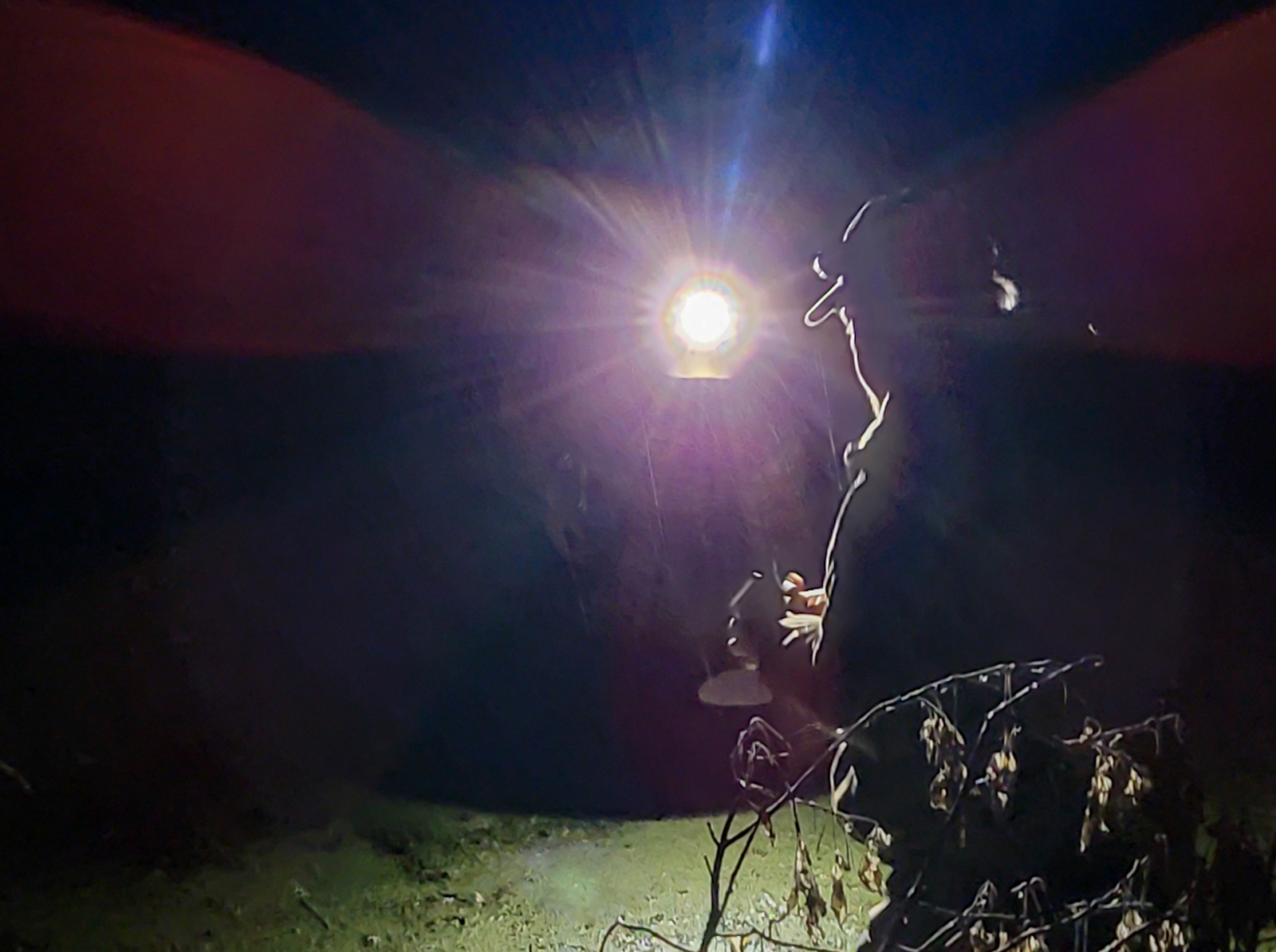
Delta Waterfowl’s historic property is a labyrinth of dikes and trails that traverse the site and wind around individual ponds and wetland management cells. Navigating the rain-slicked paths proved challenging in the inky predawn.
Mud-packed tires provided little traction, and the lead truck in the hunting convey slid off the trail, halting near the cattails. Tractors are a godsend in situations like this, and unexpectedly, the property managers had one nearby. In minutes, the convoy was rolling again. What luck!
A tracked Argo parked at the end of the trail to transport us into the marsh. We tossed our gear in the back, climbed in and waited. The starter clicked but didn’t turn over. Oh boy. I was ready to grab my Benelli and dash out on foot to catch the first flight of canvasbacks. But our mechanically inclined guide jumped the starter, and we were back in business.

A Place for Ducks
While it was too dark to see en route to the marsh, we drove past constructed wetlands used in the Marsh Ecology Research Project, which started in 1979. Biologists could control water levels in each of the ten cells and monitor the corresponding plant ecology, waterfowl behavior and use.
I learned that canvasbacks love the tubers of sago pondweed, which comprise most of its diet. By managing for sago, the canvasback has a reliable food source at Delta Marsh. Seeing management in action makes me feel good about putting money towards conservation organizations like Delta Waterfowl.
Marsh Medley
In a typical year, by October, teal would have already winged their way south. This year, migration was slower than usual. Plenty of blue-winged teal offered opportunities, even on the big water. Moments after legal shooting time, a small group of teal flittered into our decoys. Benellis barked, and two birds dropped. The hunt was off to a good start.
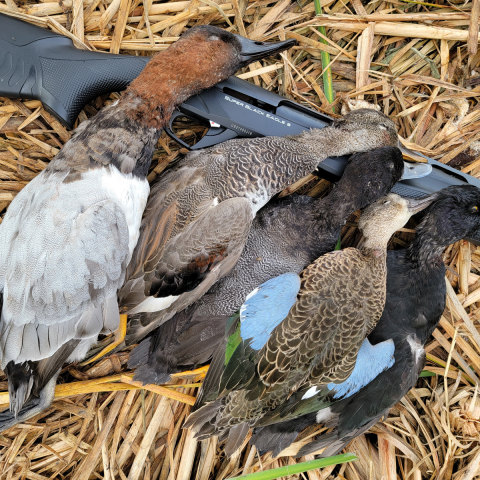
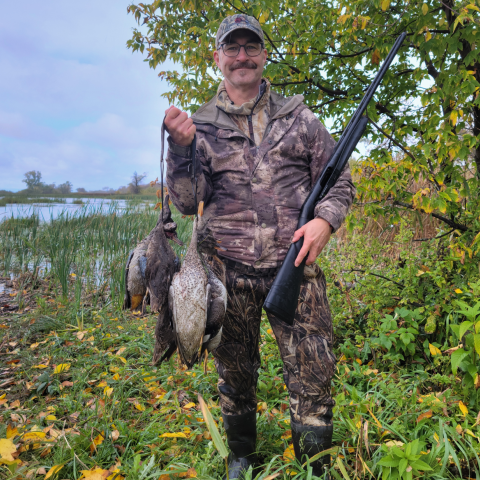
Tall cattails concealed our group of five hunters on a narrow spit of land jutting into the shallow bay, acting as a partial wave break. Decoys bobbed enthusiastically in the wind, even on the leeward side. A pair of canvasbacks rode the wind over the blocks, realizing moments too late the faux fowl had deceived them. A drake and then another splashed into the water with shots from two hunters. The goal for the day was shooting divers; this spot didn’t disappoint. Canvasback, scaup, and ring-necked ducks rounded out the morning's bag.
The marsh is a complex series of interconnected shallow bays separated from Lake Manitoba by a broad beach ridge. It stretches 18 miles east to west and is 2.5 miles wide in spots. The vast size of this marsh amazed me. The rain stopped by midmorning, but the wind never let up, pushing the passing ducks farther out as they flew along the shoreline. In this expansive habitat, the ducks have many options for food and rest, and most didn’t seem that interested in our decoys.
Premium ammunition and a tight pattern can make the difference between a clean kill and a miss, especially on long shots. The canvasback is a big, tough duck that takes a solid hit to anchor one quickly. The SBE 3, equipped with a modified choke and paired with HEVI-Metal Xtreme duplex load (No. 6 tungsten/No. 3 steel), worked supremely well in these adverse conditions.
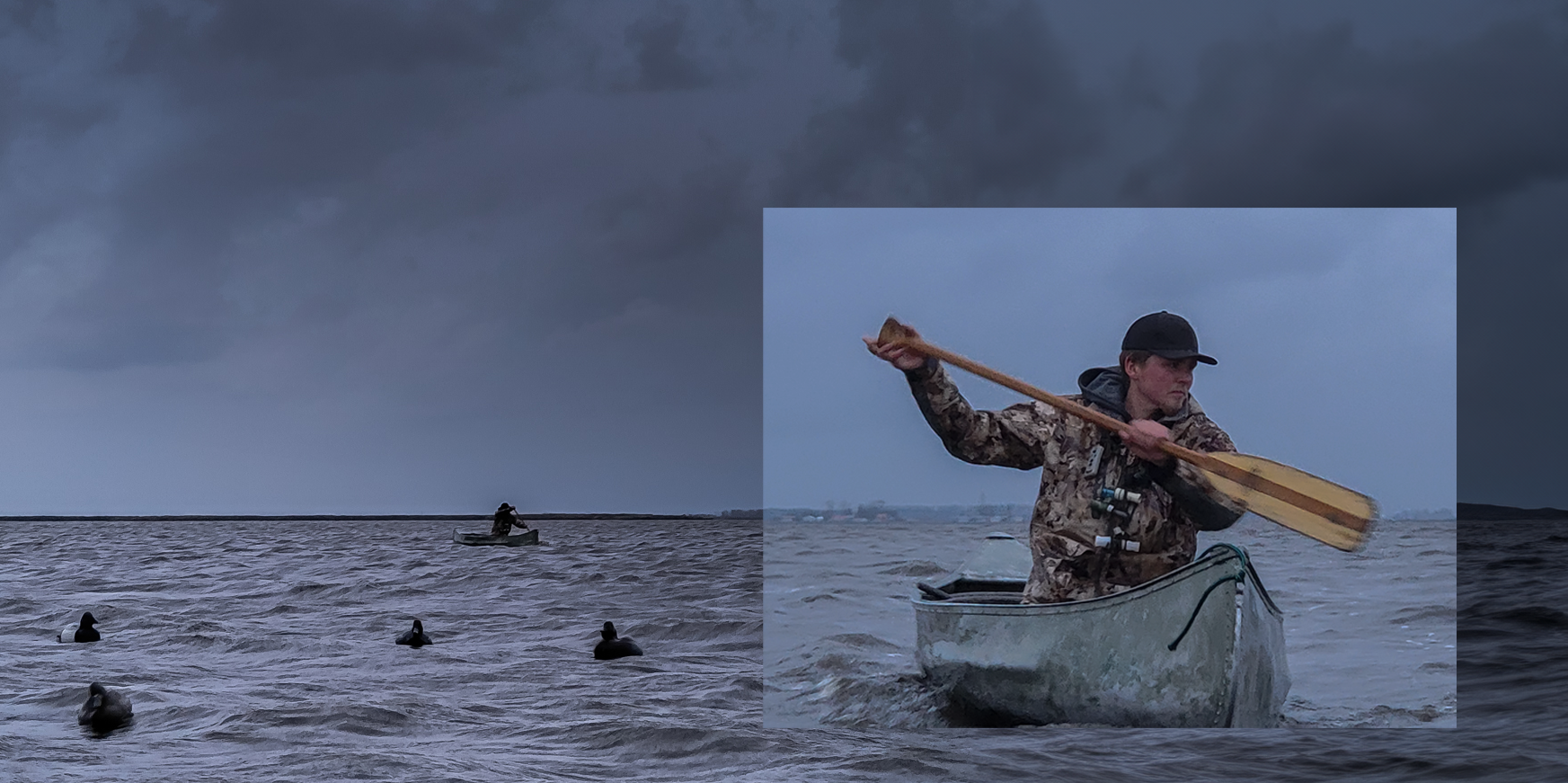
Hunting with a retriever has its rewards, but these conditions would have pushed the limits of most gundogs. Thankfully, our guide doubled as our ‘duck dog.’ Birds that dropped farther than wading distance could have been lost. However, when they did, our guide, in a flash, launched a canoe and solo paddled through whitecaps for the retrieve! I was in awe of his speed and comfortable skill. Don’t worry. He got an extra treat (bacon) at breakfast for his hard work.
Strong Winds
Lake Manitoba is a vast inland lake that funnels migrating waterfowl along its shores. On the second day, gale-force winds blew out of the north. The big trees bent and swayed. Another guide took us to a unique spot backed against Lake Manitoba. Cottonwoods and maple cut the wind up high while a dense undergrowth of willow and chokecherry sheltered our blind. The roar of the wind through the trees didn’t match the calm water in front of us. Ducks, mostly teal at this site, would skirt across the decoys; however, if they evaded us by flying high, the wind would sail them out of the decoys faster than they came in.
The SBE 3 is sleek, light and nimble in the hand—exactly what we needed for these small ducks. Fast-flying teal test your shooting abilities. Adding to the challenge, the low contrast between sky and water required keeping a close eye on the red fibre-optic sight.
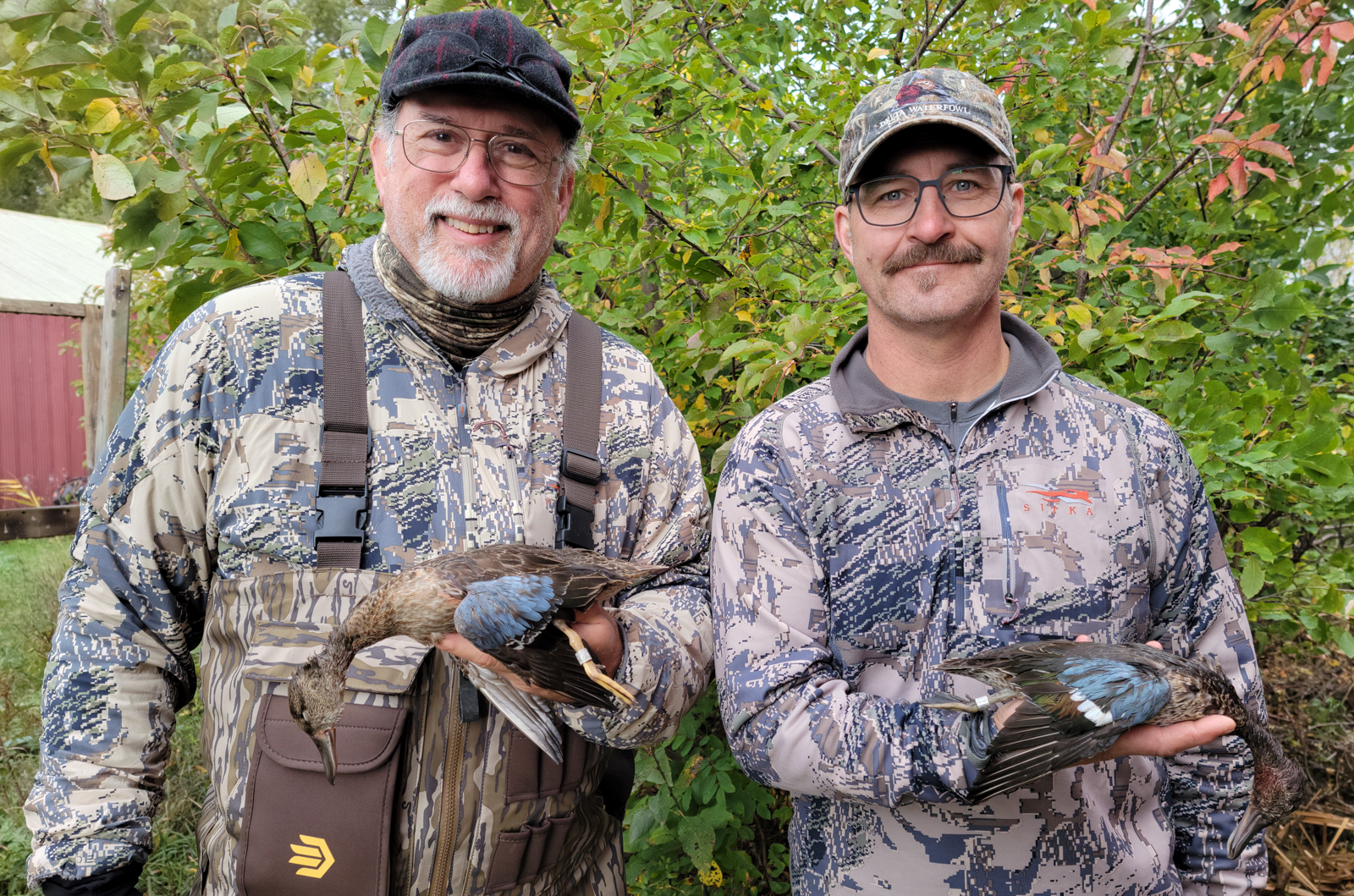
Our morning in the pond produced a strap full of dabbler ducks, but the icing on the cake for me was a banded drake blue-winged teal. I was still reeling with the excitement of the band bling for my call lanyard when fellow outdoor writer Ken Perrotte toppled a matching banded hen. Coincidentally, Delta Waterfowl biologist Dr. Chris Nicolai banded these birds in late summer not far from this exact pond.

Good Company
Delta Waterfowl’s CEO, Dr. Scott Petrie, paid us a surprise visit at the marsh. Petrie is an avid waterfowler, as you would hope and expect from someone in his position. He knows this place well from his days as a graduate student in the 1980s when he worked on the Marsh Ecology Research Program and Minnedosa Canvasback Project.
That evening, conversations around the fireplace mainly revolved around dogs and duck hunting, but we dug into deeper topics like hunter recruitment and how predators impact waterfowl production. The writers were also entertained by Petrie’s English springer spaniel Boone, who has learned how to ‘smile’ in a hilarious display of teeth and gums.
Parting Shots
Delta Marsh is rich in history where stories about hunting, research, management, education, and conservation come to life. Hunting here fulfilled a lifelong dream, and I’ve come away from the experience with new friends and a better understanding of waterfowl conservation.
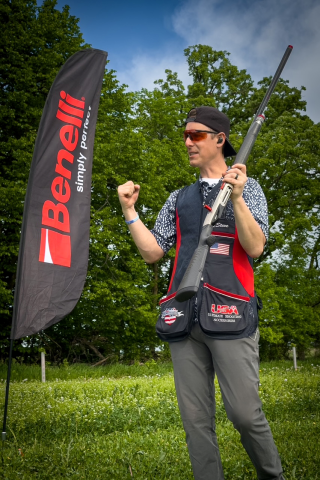
Delta Waterfowl is running a Million Duck Campaign, where conservation success can be directly measured in the fall flight. This ambitious goal requires on-the-ground volunteers, donations from individual supporters and corporate conservation partners like Benelli.
Every waterfowler has a special place where they instinctively feel that deep connection with their hunting heritage. The Delta Waterfowl property in southern Manitoba was that place for me. When all the pieces fall together, hunting can satisfy our needs for food, friendship, time outdoors, and a secure feeling of belonging in this time and place. It doesn’t get much better than this, folks. I’ll treasure my hunt at Delta Marsh forever.